Group training is having a real moment: 45% of Gen Z and Millennials are actively seeking it out, and time is the top barrier keeping current members from doing more of it, which makes smart fitness class scheduling one of your easiest retention wins.
Group classes still work as built-in accountability systems, social outlets, and community builders, all in one. As 23-year gym owner Mel Tempest puts it, “Why don’t you ask them what they want?” The best group workout classes are the ones that actually do.
Here are 15 group exercise ideas, with the practical details for each: best fit, intensity, duration, equipment, and modifications.
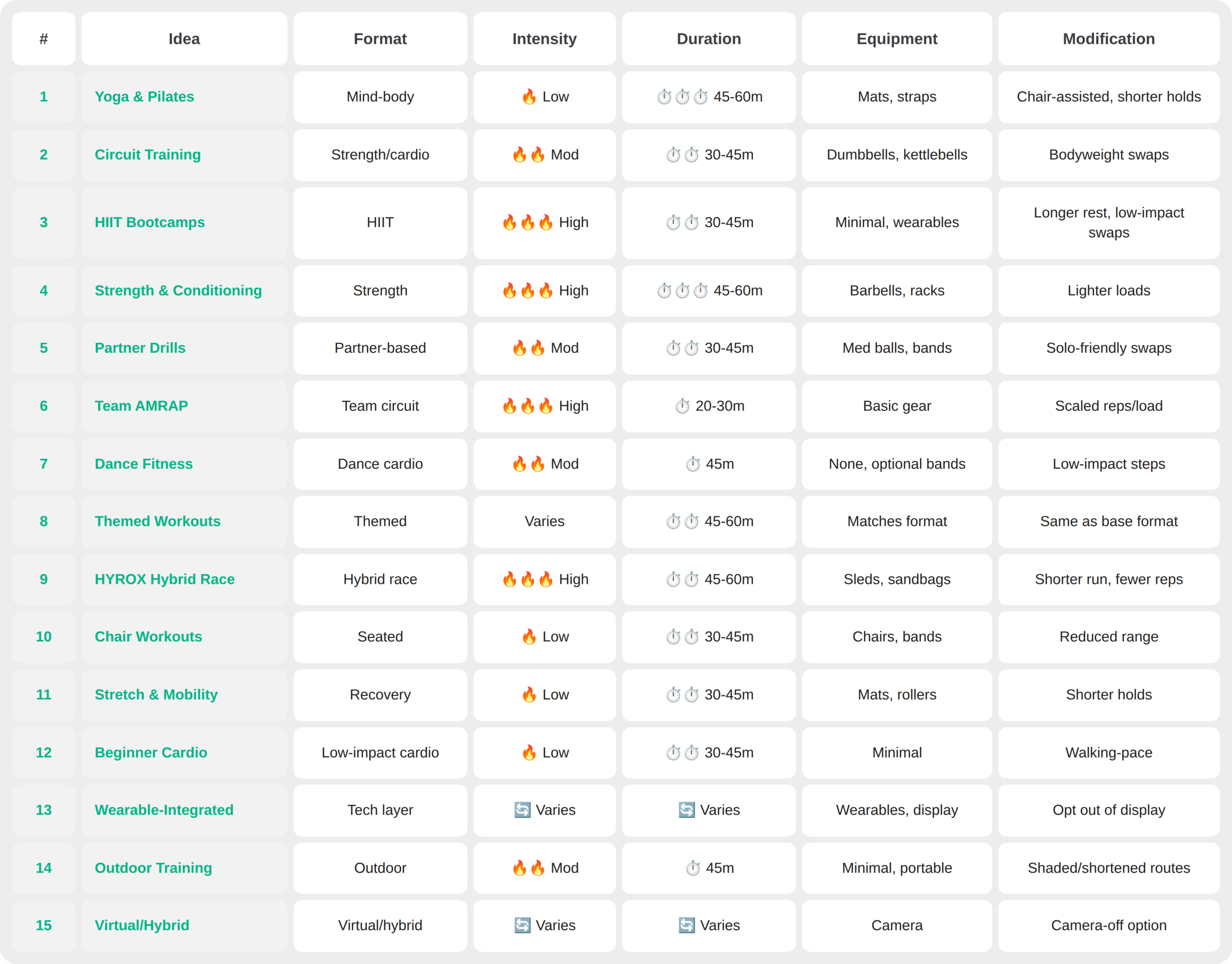
At a Glance: 15 Ideas for Group Workout Classes Compared
Check Out: How to Run Group Workout Classes That Keep Clients Coming Back
4 Classic Group Exercise Ideas (That Still Work)
#1: Yoga & Pilates for Groups
The #1 trend as I’m writing this is hands down Pilates! And it does not feel like a comeback, more like reaching a whole new peak. Both Pilates and yoga studios are packed, reformer waitlists are weeks long, and it’s officially become a social ritual for friends and couples alike. Do the flow, sip your matcha after!
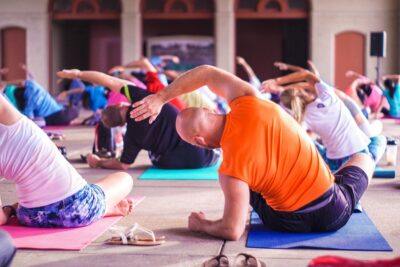
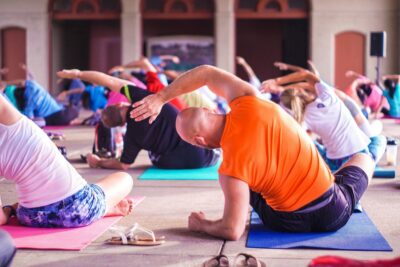
Group Pilates and yoga classes still deliver everything members love: low-impact intensity, great core work, and a calm reset that keeps them coming back. Add beginner-friendly options and props, and it’s one of the easiest formats to fill, again and again.
For the third year running, Pilates was the most-booked workout worldwide, with reservations up 66% year over year.
- Best fit: Low-impact and recovery-focused members.
- Intensity: Low to moderate.
- Duration: 45-60 minutes.
- Equipment: Mats, straps, light props.
- Modification: Chair-assisted poses or shorter holds.
Check Out: 9 Essential Steps to Open a Successful Pilates Studio
#2: Circuit Training
Not every format needs a reinvention. Circuit training continues to be one of the most effective, no-fuss group exercise classes you can run. It’s efficient, endlessly adaptable, and works just as well in a boutique studio as it does in a big-box gym.
You can design circuit training classes around time, training goals, equipment, or space, making it easy to scale for different group sizes and fitness levels.
It’s especially appealing for people who want to stay fit without making fitness their whole personality, those who want to live longer, move better, and show up consistently.
Circuit classes also create natural moments for encouragement and connection as members rotate through stations together.
- Best fit: Mixed-ability groups.
- Intensity: Moderate.
- Duration: 30-45 minutes.
- Equipment: Dumbbells, kettlebells, resistance bands.
- Modification: Bodyweight swaps at each station.
#3: HIIT Bootcamps
HIIT bootcamps are for the high-energy crowd who thrive on intensity and variety. These classes pair short bursts of max-effort movement with brief recovery windows to boost cardiovascular fitness, build muscle endurance, and burn calories fast.
Today, HIIT formats have leveled up: more coaches are blending cardio and strength, running hybrid indoor-outdoor sessions, and incorporating wearable tech for live heart-rate tracking and leaderboards. These bootcamps are fast-paced, often themed, and always deliver a challenge.
Whether it’s a “Lower Body Burn” day or a total-body AMRAP finisher, members come for the sweat, but stay for the group energy and competitive edge.
- Best fit: High-energy, competitive members.
- Intensity: High.
- Duration: 30-45 minutes.
- Equipment: Minimal, optional wearables for tracking.
- Modification: Longer recovery windows, low-impact swaps.
#4: Strength and Conditioning Groups
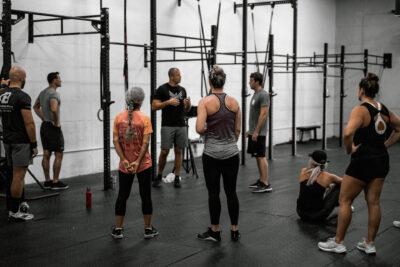
Strength training is no longer just for athletes or bodybuilders. Group strength classes are growing in popularity, especially among beginners, busy professionals, and aging adults looking to preserve muscle mass and stay resilient.
These programs often follow a progressive structure, starting with movement basics like squats, deadlifts, and presses, then layering in more advanced patterns over time. It’s a smart format that delivers results while keeping members safe and motivated.
Small group setups are common, allowing coaches to correct form and personalize progressions. Strength and conditioning formats give members more than just a workout, they build confidence, consistency, and long-term physical capacity.
- Best fit: Beginners through advanced lifters, in small groups.
- Intensity: Moderate to high.
- Duration: 45-60 minutes.
- Equipment: Barbells, dumbbells, racks.
- Modification: Lighter loads, goblet-squat regressions.
5 Most Fun and Creative Group Workout Ideas
#1: Partner Drills (Buddy Workouts)
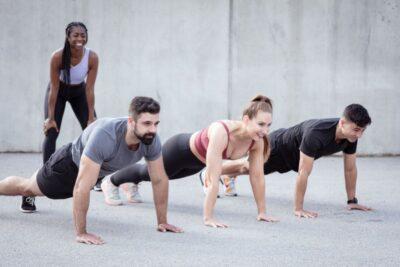
Partner workouts are gaining traction as one of the top group fitness ideas right now. These collaborative formats, like buddy slams, partner med-ball tosses, and synchronized burpees, boost social interaction, accountability, and motivation in group settings.
The infectious energy of teamwork makes partner drills a go-to for studios aiming to enhance community-driven fitness experiences.
Exercises to include:
- Partner squat
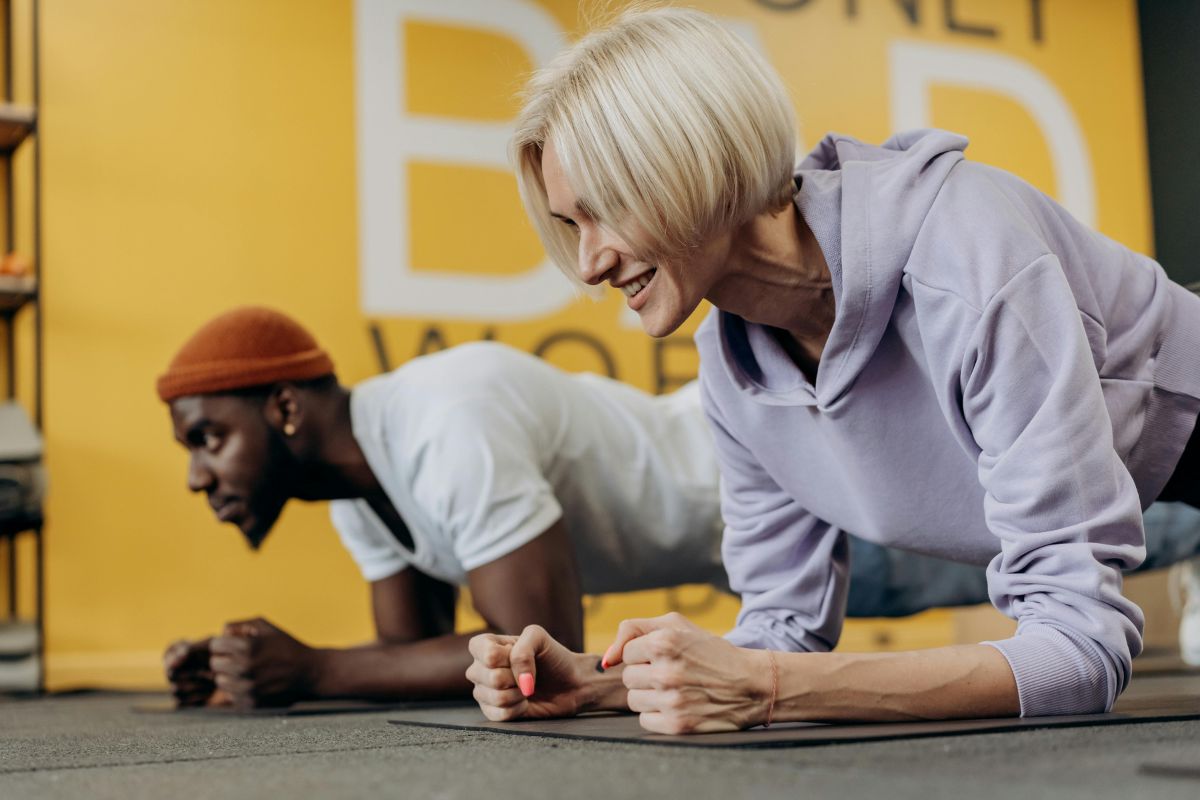
- Plank high fives
- Medicine ball sit-ups
- Partner lunges
- Partner push-up
- Partner wall sits
- Resistance band partner rows
- Partner-assisted stretching
- Partner burpees
- Wheelbarrow walks
- Best fit: Paired members of similar ability.
- Intensity: Moderate.
- Duration: 30-45 minutes.
- Equipment: Medicine balls, resistance bands.
- Modification: Solo-friendly swaps for odd class numbers.
#2: Team-Based AMRAP Challenges
AMRAP (as many rounds (or reps) as possible) makes for a great group workout class because it hits a rare sweet spot: measurable progress, scalable intensity, and natural competition.
When done in teams, AMRAPs transform into a high-energy, social experience. Everyone is racing against the clock toward a shared goal, creating a game-like atmosphere that bonds participants through effort.
It’s inclusive too; beginners and advanced athletes can both participate, adjusting their load or pace while still contributing. That mix of camaraderie and challenge is why AMRAP formats show up so often in CrossFit, bootcamps, and functional training programs.
It packs strength, cardio, and endurance into one session, and participants can track progress by showing how many rounds they complete each time.
Exercises to include:
- Bodyweight Exercises: Burpees, push-ups, squats, lunges, planks, mountain climbers
- Weightlifting Exercises: Overhead presses, squats with weights, dumbbell rows
- Cardio Exercises: Running, rowing, jumping jacks
- Best fit: Competitive, team-oriented members.
- Intensity: Moderate to high.
- Duration: 20-30 minutes.
- Equipment: Basic strength and cardio gear.
- Modification: Scaled reps and load, rest as needed.
Check Out: The Benefits of AMRAP Workouts for Your Clients
#3: Dance Fitness Mashups
Dance-based classes continue to evolve, and in 2025, it’s less Zumba, more creative fusion, thanks in part to platforms like TikTok, where native dances have helped keep rhythmic movement at the center of social fitness trends.
Studios are now blending choreography with functional training elements, like bodyweight intervals between routines or resistance bands worked into the flow.
These formats appeal to more than just dance lovers; they attract anyone who wants a fun, effective cardio workout without the treadmill. The music has shifted slightly from classic Zumba, but Latin beats, EDM, and pop favorites still dominate.
With curated playlists, expressive movement, and serious mood-boosting benefits, dance mashups give members a reason to show up, even on days they’d rather stay home.
- Best fit: Members who want cardio without the treadmill.
- Intensity: Moderate.
- Duration: 45 minutes.
- Equipment: None, optional resistance bands.
- Modification: Low-impact steps, seated variations.
#4: Themed Workouts
Injecting a theme into your class is a simple but powerful way to increase attendance and energy. Whether it’s an 80s throwback workout, superhero bootcamp, or “Barbie” night, themes give members a reason to talk about your class outside the studio.
They work especially well around holidays, events, movie releases, or just as a surprise twist to re-ignite attendance mid-month. The programming doesn’t have to change much, but the atmosphere does. And that alone can make your workouts more memorable and shareable.
The Customer
Engagement Playbook
for Your Fitness
Business
Discover more
Fitness First’s ‘Find the Hero Within’ Challenge partnered with Marvel’s Captain America for an in‑studio adventure: a 7‑station “Find the Hero Within” bootcamp featuring runs, KB swings, ski erg, sandbag squats, and more, showing how major brands are using themed formats to engage members.
They’re not just fun, they’re effective for retention and referrals. People show up for the music, the mood, and the moment. All you need to do is wrap a well-structured class in a bit of creativity, and you’ve got a full room and a lot of phones out.
- Best fit: Any group looking for a seasonal boost.
- Intensity: Varies with base format.
- Duration: 45-60 minutes.
- Equipment: Matches the underlying format.
- Modification: Same as the base format, themed cueing only.
#5: A HYROX-Inspired Hybrid Race
Hybrid fitness races like HYROX have taken off globally, and now gyms are adapting the format for everyday classes.
In a typical setup, participants run short distances between functional strength stations, think sled pushes, sandbag lunges, and kettlebell carries. Participants run 1km, followed by 1 functional workout station, repeated eight times.
These race-style pop-up workouts are some of the boldest fitness group class ideas out there, attracting both endurance- and strength-focused members and creating a fresh, competitive group dynamic.
You can run them outdoors, brand them as premium events, and even link them with your indoor programming for a full-cycle experience. They’re functional, measurable, highly social, and they photograph well, which means they sell themselves on social.
- Best fit: Endurance and strength members who like competition.
- Intensity: High.
- Duration: 45-60 minutes.
- Equipment: Sleds, sandbags, kettlebells.
- Modification: Shorter run distance, fewer reps per station.
3 Low-Impact and Inclusive Options for Your Next Fitness Group Class
Low-impact group exercise has become IT in 2026 because it aligns with a broader shift toward sustainable, inclusive, and holistic health approaches. It emphasizes long-term benefits, injury prevention, and mental well-being, rather than short-term intensity or extreme physical challenge.
Its low-impact workouts can be done at varied paces and require minimal equipment or skills, making them appealing to do together for friends who are not on the same “fitness level.”
#1: Chair Workouts
Chair-based workouts are often misunderstood as “just for seniors”, but in reality, they’re for anyone working around limitations, getting back into movement, or simply trying to escape the sedentary trap of modern life. They’re also ideal for people who don’t have access to a gym, equipment, or ample space.
You can build full-body strength, flexibility, and balance—all while staying grounded. For studios looking to expand their reach or offer off-peak programming, chair classes are a low-barrier, high-retention option that meets people where they are.
- Best fit: Members working around limitations or returning to movement.
- Intensity: Low.
- Duration: 30-45 minutes.
- Equipment: Chairs, light weights or bands.
- Modification: Reduced range of motion.
#2: Stretch and Mobility Circuits
The majority of gym-goers, regardless of their fitness level, are waking up to the fact that flexibility, joint health, and quality of movement matter just as much as reps or sweat. These classes blend active stretching, foam rolling, and joint stability work into sessions that feel more like self-care than bootcamp.
For strength-focused members, they offer recovery and injury prevention. For everyone else, they’re a gentle on-ramp to consistent movement with low intimidation and high ROI.
- Best fit: Strength-focused members needing recovery, plus anyone easing into movement.
- Intensity: Low.
- Duration: 30-45 minutes.
- Equipment: Mats, foam rollers, straps.
- Modification: Shorter holds, supported positions.
#3: Beginner-Friendly Cardio Classes
These are the gateway for so many members, especially those who wouldn’t call themselves “fitness people.” Formats like light aerobic circuits, rhythm walking, or low-impact bike intervals help build cardiovascular health without joint strain or mental burnout.
They’re approachable, scalable, and far more effective than most people expect. With the right coaching and music, they still deliver a sweat, but without the pain or pressure. Positioning these group fitness class ideas as foundational, not fallback, can be a powerful mindset shift for new members.
- Best fit: New or reluctant exercisers.
- Intensity: Low to moderate.
- Duration: 30-45 minutes.
- Equipment: Minimal, optional stationary bikes.
- Modification: Walking-pace and seated intervals.
Free Ebook: Learn 6 Keys to Building a Loyal Fitness Community
3 Ways to Modernize Group Workout Classes in 2026
Here are three ways to modernize your group workout programming: tech-enabled, socially driven, and more flexible than ever.
#1: Wearable Integration
Group fitness is getting smarter. Wearables like MyZone, WHOOP, Garmin, etc, are now synced with class formats to display live stats, heart rate zones, effort scores, or calories burned on studio screens. Wearable technology ranks first in ACSM’s 2026 Worldwide Fitness Trends survey of fitness professionals, ahead of every other format on the list.
It adds a sense of progress without overcomplicating the experience, and gives both coaches and members a more informed way to train. It’s data-backed motivation, and it sticks.
It requires some upfront investment for both your studio, gym, or personal training service, as well as for your clients, but in case you and they are already using it, it’s a great perk to start implementing in your fitness classes.
- Best fit: Any format, added as a tech layer.
- Intensity: Matches the base class.
- Duration: Matches the base class.
- Equipment: Heart-rate wearables, studio display.
- Modification: Opt out of the display, track privately.
#2: Outdoor Group Training
What started as a necessity has become one of the most flexible group training formats you can offer. Outdoor group sessions, whether bootcamps in the park or interval circuits in a lot, let members train with fewer constraints and more energy.
They’re cost-effective to run, visible to the public, and great for drawing in first-timers or offering seasonal variety. What we’ve seen work exceptionally well to acquire new clients is running free sessions for newcomers, or hosting open-to-the-public events, and then promoting your higher-ticket services on the side.
- Best fit: Members who want variety and fresh air.
- Intensity: Moderate to high.
- Duration: 45 minutes.
- Equipment: Minimal, portable.
- Modification: Shaded or shortened routes.
#3: Virtual and Hybrid Live Classes
Virtual and hybrid delivery is another programming option worth adding to your mix, not a ranked trend: what you can offer outdoors vs. indoors, you can also deliver virtually vs. face-to-face.
While virtual fitness groups may still play second fiddle to in-person sessions, many studios are now dialing in their tech to deliver livestreamed or dual-format classes that keep remote members engaged without sacrificing quality.
This works especially well for formats like yoga, Pilates, strength, and mobility, where clear instruction makes or breaks the experience. When done right, a hybrid isn’t a compromise; it’s a growth channel. And if your audience spans multiple time zones, it could become your signature advantage.
- Best fit: Members balancing tight schedules, multiple locations, or travel.
- Intensity: Matches the base format.
- Duration: Matches the in-person class.
- Equipment: Camera, stable connection.
- Modification: Camera-off option, self-paced cueing.
How to Choose Group Workout Ideas for Your Class Schedule
Not every format on this list belongs in every schedule. The right group workout ideas come down to member demand, ability mix, equipment, instructor skills, and the time slots you have open.
- Start by watching which classes fill up first, then weight new gym class ideas toward those formats. A studio full of beginners needs more chair workouts and mobility circuits than HYROX-style races, while an athletic base will ask for AMRAP challenges and strength conditioning.
- Equipment and instructor skill set the ceiling on what’s realistic, and capacity matters too: a 12-person studio and a 40-person gym floor call for different formats.
- Once a class is live, track attendance, fill rate, rebooking, cancellations, and no-shows for the first four to six weeks.
A format that fills consistently and rebooks well earns a permanent spot on the fitness class scheduling calendar. One that under-fills or sees high no-shows is a candidate to retime, re-market, or replace.
ABC Glofox’s scheduling and engagement tools make this easier to track across every class and instructor.
Natural Measures Cycling grew class attendance 110% after tightening up scheduling and member engagement, with owner Vikki Gladney calling it “an investment that helps me to stand out.”
Read More: Best Fitness Class Scheduling Software for Gyms & Studios in 2026
Conclusion
Whether you’re running classic strength circuits, launching dance mashups, or experimenting with outdoor hybrid sessions, the best group workout ideas aren’t just about variety, they’re about longevity. The formats that win are the ones that meet real member needs: connection, consistency, and results they can feel.
Picking the right group workout ideas is only half the job. ABC Glofox’s scheduling, booking, reminders, and engagement tools handle the other half, so the classes on this list actually fill and stay simple to run. Get a Free Demo Today