
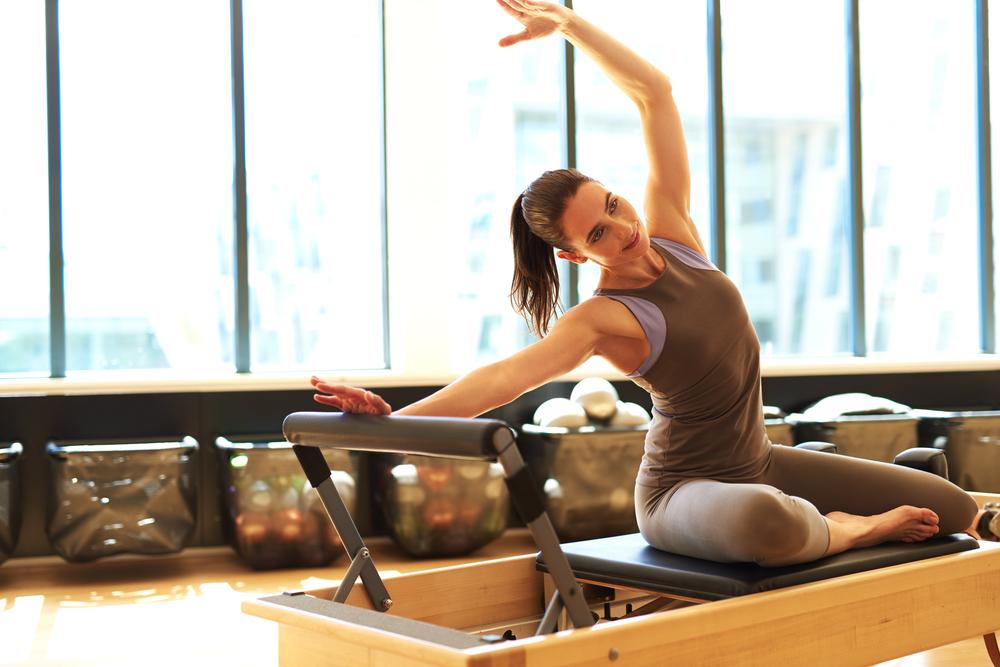
In the United States, Pilates is the fastest-growing fitness modality, with participation rising from 9.2 million to 12.9 million people since 2019, a nearly 40% increase.
But here is what the Instagram aesthetic does not show you: the 6:00 AM class you are teaching because your instructor called in sick. The $15,000 HVAC bill you never saw coming. The first 12 months were when the studio looked full, but the bank account won’t agree, due to rising rent, wages, and inflation.
Owning a Pilates studio is, for most people who pursue it, a life passion. It rewards as much as it demands. This guide covers how to open a Pilates studio from the ground up.
TL;DR
- Pilates studios can absolutely be profitable, but a full class schedule does not automatically mean a healthy bottom line; cost management is what makes the difference.
- Your Pilates studio model, your target client, and your location are the three decisions that shape everything else, and they are worth getting right before you spend anything.
- Most studios that struggle in year one underinvest in systems rather than in equipment or space.
- The gap between a client who tries one class and one who stays for years almost always comes down to the small things done consistently.
What’s Inside
- Are Pilates Studios Profitable?
- Step 1: Define Your Studio Model
- Step 2: Write a Business Plan That Works
- Step 3: Choose Your Location Strategically
- Step 4: Know Your Startup Costs
- Step 5: Get Legal and Licensed
- Step 6: Hire and Retain Great Instructors
- Step 7: Build a Pre-Launch Marketing Plan
- Step 8: Set Up Your Studio Tech Stack
- Step 9: Nail the Member Experience From Day One
- FAQs
- Ready to Open Your Pilates Studio?
Are Pilates Studios Profitable?
You have probably walked past a reformer studio in your neighborhood and noticed it is always full. Maybe you have been practicing for years, and the thought keeps coming back: could I do this myself?
The honest answer is yes. And also, it is not as simple as a full class schedule makes it look.
The US Pilates and yoga studio industry hit $19.2 billion in revenue in 2025. Pilates clients are loyal, they pay a premium, and when they find a studio they trust, 44% stay for more than two years. That is the good news!
Here is the part that catches most new owners off guard: a full room does not mean a healthy bank account. Your Pilates instructors need to be paid, and that bill alone typically eats up 35–45% of everything you bring in. Rent takes another significant slice.
By the time you cover both, plus insurance, software, and the dozen other things that keep a studio running, what is left is often closer to 6-7 cents on every dollar. Some studios do better. Some do worse. It depends almost entirely on how tightly those two costs are managed.
Studios that get that balance right and focus on keeping members from the start can cover their monthly costs within 3–6 months of opening. Getting back everything you put in upfront takes closer to 3–5 years. That is not a reason not to do it. It is just worth knowing before you sign anything.
The other thing nobody tells you upfront: you will spend most of your time doing everything except Pilates. Scheduling, admin, hiring, covering classes when someone cancels at 5:45 AM. The studios that thrive are the ones where the owner figured out how to run the business, not just the floor. This guide is about helping you do both.
Step #1: Define Your Studio Model
Before you look at a single location or price a reformer, you need a clear answer to one question: what kind of Pilates business are you opening?
This decision shapes everything downstream, from your startup costs and space requirements to the clients you attract and the price you can charge. It is worth spending real time here.
First Decision: Reformer, Mat, or Hybrid?
These are not interchangeable models. They have different economics, different client profiles, and very different capital requirements.
- Reformer studios are the growth story right now. They command higher per-class prices and attract clients specifically seeking reformer training. Also, they tend to build strong loyalty because the reformer itself creates a learning curve that keeps people coming back.
The tradeoff is cost: reformers range from $3,000 to $6,000 each for commercial-grade equipment, and most studios open with 8–12 machines. That is a significant line item before you have touched rent or build-out.
- Mat studios have lower startup costs and greater scheduling flexibility, but they compete in a more commoditized space.
Virtual and on-demand mat Pilates is widely available, which puts pressure on in-person studios to differentiate on community and instruction quality rather than on the modality itself.
- Hybrid studios offer both, which broadens your appeal but adds complexity to scheduling, staffing, and space planning.
This model works well for owners who want to serve a wider range of clients, including beginners who are not ready to commit to reformer pricing.
Second Decision: Who Is Your Client?
The more specific your answer, the easier everything else becomes. Pilates attracts a wide range of people for very different reasons, and studios that try to serve all of them often serve none of them particularly well.
Some strong niche positions that are working in the current market include:
- Postpartum and prenatal Pilates
- Athletic conditioning for runners or cyclists
- Clinical and rehabilitation-focused Pilates
- Premium reformer studios targeting high-income individuals
Look at what is already in your area before you decide. A market with three reformer studios may need a mat-focused clinical option far more than it needs a fourth reformer boutique.
Check Out: Beyond the Reformer: Why the Most Successful Pilates Studios Think Like Brands
Third Decision: Independent vs. Franchise Pilates Business
This is a business structure decision, not just a branding one. Building recognition under your own brand takes longer, typically 12–24 months before the name carries real weight locally.
A franchise gives you a playbook, marketing support, and an established client base, but the initial investment is substantially higher, and you trade autonomy for systems.
Most of the guidance in this article applies to independent studio owners. If you are evaluating a franchise route, the boutique fitness studio guide is worth reading alongside this one to understand how the economics and operating model differ.
Check Out: Fitness Franchise Management: Everything You Need to Know
Step #2: Write a Business Plan That Works
A business plan is not a formality. It is the document that forces you to confront whether your idea actually works as a business before you spend the money finding out.
The plan you write for a bank or SBA loan will look different from the internal roadmap you use to manage your first year. The first should be able to show how you plan to turn it into a profitable business, while the second will be your north star to revisit (and modify) as you grow your studio.
Both are worth having. But for most independent studio owners, the most valuable output of the planning process is a realistic financial model: what your monthly fixed costs are, how many filled class slots you need to cover them, and at what point the studio becomes cash-flow positive.
Your plan should cover your target audience, the local competitive landscape, your service and pricing structure, your marketing strategy, and 12-month financial projections.
Check Out: 9 Key Elements You Need to Include in Your Gym Business Plan
Step #3: Choose Your Location Strategically
Location in boutique fitness is not just about foot traffic. It is about proximity to the person you defined in the first step.
A reformer studio targeting postpartum clients operates differently in a suburban strip mall near a pediatric clinic than in a downtown office corridor. Overall, the space has to match the lifestyle of the person you are trying to serve.
On the physical side: a 6-reformer studio needs roughly 1,000 square feet of functional floor space. A 10-reformer setup requires closer to 1,500–2,000 square feet. Ceilings should be at least 9–10 feet high. These are all average numbers that you need to tailor to your case.
Beyond square footage, confirm zoning allows commercial fitness use before you get attached to a space. Some commercial leases restrict it, and finding out after you have negotiated terms costs time and money.
Remember that you have a right to negotiate hard on your lease. Typically, a three to five-year term with a renewal option is the standard. It is advisable to keep rent at or below 20% of your projected gross revenue for the math to work.
Step #4: Know Your Startup Costs
In most US markets, opening a reformer Pilates studio costs between $150,000 and $350,000. Premium builds in high-rent cities can push past $450,000. Here is where the money goes:
- Equipment: Commercial-grade reformers run $3,000–$6,000 each. Most studios open with 8–12 units. Add supporting apparatus, mats, and props, and you are looking at $50,000–$100,000+ in equipment alone before a single client walks in.
- Build-out covers flooring, mirrors, soundproofing, lighting, signage, reception, and changing areas. Expect $20,000–$50,000 for a mid-range fit-out. Leasehold improvements can easily exceed $50,000 in larger or more premium spaces.
- Operating cushion is the cost most people skip. You need 3–6 months of fixed expenses in reserve before opening, covering rent, payroll, and utilities while membership revenue builds.
Check Out: The Ultimate Guide to Pilates Studio Equipment: Must-Have Gear for Every Studio
Step #5: Get Legal and Licensed
Most Pilates studio owners form an LLC. It separates your personal assets from business liability and is the standard structure lenders expect. Register with your state, file for an EIN through the IRS, and open a dedicated business bank account.
There is no single national license for fitness studios, but you will typically need a:
- General business license
- Certificate of occupancy confirming the space meets health and safety codes
- Local fitness facility permit (depending on your municipality)
Insurance
The 6 Crucial Steps to
Opening a Gym or
Studio
Discover more
At a minimum, you need general liability coverage and commercial property insurance. If you employ staff, add workers’ compensation. Annual premiums typically range from $500 to $1,500, depending on location and coverage scope.
Other legal documents
Liability waivers, membership agreements, instructor employment contracts, and a privacy policy are all required before you open. Have a lawyer review them, not a template generator.
Step #6: Hire and Retain Great Instructors
Your instructors are the product. A well-designed studio with mediocre coaching will not hold members. A modest studio with exceptional instructors will.
For a reformer studio, look for instructors with a recognized certification, such as NPCP or PMA-accredited programs.
Experience matters, but so does personality. Clients often follow instructors, not studios, so hiring for culture fit and retention intent is as important as credentials.
On compensation: junior instructors typically earn $15–$30 per class hour; senior instructors earn $25–$50 per class hour. Some studios use a hybrid model of low base pay plus per-head commission, which aligns instructor incentives with class fill rates. Whatever structure you choose, make it transparent and competitive from day one. High instructor turnover is one of the fastest ways to lose members.
Plan your staffing around your class schedule, not the other way around. Front desk coverage requires approximately 30 billable hours per week for most studios. Instructors should be scheduled for sustainable loads, not back-to-back hours that lead to burnout by month six.
Our guide to hiring gym staff covers the full recruitment and onboarding process.
Step #7: Build a Pre-Launch Marketing Plan
Most studios open with a soft launch that could have been strong. The difference is almost always how far out the marketing started.
Pre-launch marketing has one job: make sure your opening week is not your quietest one.
The most effective way to do that is a founding member offer — a discounted rate or early access package you sell before the doors open. It brings in cash before your monthly costs kick in, and it gives you a group of people who are genuinely invested in your studio from day one.
The BFS 2024 State of the Industry Report found that profitable studios consistently generate 50+ leads per month and convert 30% or more of those leads. That pipeline does not build itself on opening day. That’s why it’s advised to start building it at least 90 days out.
Practically, this means:
- Claim and optimize your Google Business Profile
- Build a waitlist landing page
- Run geo-targeted social ads to your ICP
- Partner with local businesses whose clients overlap with yours
- Pitch local press with an opening story that is actually interesting
Check Out: 12 Pilates Studio Marketing Strategies to Grow Members in 2026
Step #8: Set Up Your Studio Tech Stack
At some point in your first few weeks, you will find yourself texting a client about a booking, chasing a payment, and trying to remember who has not been in for three weeks — all at the same time. That is the moment most new Pilates studio owners realize they need a proper system, and wish they had set one up before opening day.
The admin side of running a studio is not glamorous, but it is where much of the time goes. Think of class scheduling, membership billing, client follow-ups, and no-show tracking. If each of those lives in a different place, you are spending hours every week stitching them together instead of teaching or growing the business.
What you need is one platform that handles it all and provides a clear view of who is staying and who is slipping away. Not four tools that kind of talk to each other. One connected system that runs in the background while you focus on the floor.
That is what ABC Glofox is built for. Jaclyn Webb of Pilates Society NWA put it simply:
“The ability to create a truly customizable member app with ABC Glofox has really helped us capture leads while allowing our brand to shine. The reliable software has been refreshing to work with after struggling with other brands in the past.“
If you are ready to see what that looks like for your studio, explore ABC Glofox for Pilates businesses or book a demo with the team.
Step #9: Nail the Member Experience From Day One
The gap between a client who does a trial and one who stays for three years almost always comes down to the small, consistent details.
Pilates studios where monthly churn stays below 5%, and members stay for more than two years, are not doing anything radical. They have just made the right things consistent. In practice, that means:
- Easy booking: Classes booked in under 30 seconds, waitlists that manage themselves, and a schedule that syncs straight to a client’s calendar.
- Personalized programming: Members with a plan and a clear progression feel invested in the studio, not just the classes.
- Knowing your people: Greeting clients by name, a follow-up after a first class, a check-in when someone has gone quiet for two weeks.
- Rewards and referrals: Recognizing a client’s 50th class, running a bring-a-friend program, and partnering with local businesses for member perks. These are the things people mention when they recommend your studio to someone else.
The right tools make all of this possible without it falling on you to remember everything manually.
Andrea Chapelle of Luxe Pilates found exactly that:
“ABC Glofox transformed how I operate at Luxe Pilates, streamlining everything from bookings to payments so I can spend more time with clients and less time on admin. The communication tools have been game-changing for keeping our community engaged and our classes full.”
The studios clients tell their friends about are rarely the fanciest. They are the ones who made them feel seen from day one.
FAQs – Opening a Pilates Studio
- How much does it cost to open a Pilates studio?
Most independent reformer studios in the US require between $150,000 and $350,000 to open. Premium builds in high-rent markets can exceed $450,000. Your biggest variables are reformer equipment, lease terms, and build-out scope.
- How to start your own Pilates studio?
Starting your own Pilates studio comes down to nine steps: define your studio model, write a business plan, choose your location, budget your startup costs, get legal and licensed, hire your instructors, build a pre-launch marketing plan, set up your tech stack, and focus on member experience from day one.
- Do I need to be a certified Pilates instructor to open a studio?
No. You can own a Pilates studio without being a certified instructor. However, if you plan to teach, a recognized certification, such as one that meets PMA or NPCP standards, typically requires 450+ hours of training.
- How many reformers do I need to open?
It depends on your model and budget. A new studio aiming for group classes might start with 5–10 reformers, though plenty of small studios open with fewer and scale up as classes fill.
- What licenses do I need to open a Pilates studio?
Requirements vary by location. You will generally need a general business license, a certificate of occupancy, and local fitness or health permits, depending on your municipality. Start permit applications early since processing timelines vary widely.
- What is the best software for a Pilates studio?
Look for a platform that handles scheduling, bookings, payments, member communication, and reporting in one system. ABC Glofox is built specifically for boutique fitness studios and is used by Pilates operators globally.
Ready to Open Your Pilates Studio?
The steps in this guide are not complicated. The execution is. Sourcing the right location, pricing your memberships correctly, hiring instructors who stay, and building retention from month one, each of those is a full job on its own.
What separates studios that hit their stride from those that grind through years of thin margins is usually not the quality of the Pilates. It is how well the business behind it runs.
Get the systems right early, and the practice becomes what you opened for.
ABC Glofox gives Pilates studio owners one connected platform for scheduling, payments, member communication, and retention, so less of your day disappears into admin. Book a demo to see it in action.
“Our transition from the old platform was handled very smoothly with plenty of support throughout. Glofox is easy to use, and the aftercare team has been fantastic. They respond almost immediately and are always ready to help with any question. Whether by email or phone, the team is consistently on the ball.” – Nat Clark, Slide Pilates.
Check out how ABC Glofox can help you manage bookings, track retention, and grow your Pilates business like a pro. Book a demo →