TL;DR: A “full” class schedule means nothing if your members don’t show up. High gym no show rates cost you session revenue, waste instructor time, and kill trial conversions before they start. Here’s how to fix this problem with automation, commitment mechanics, and smarter data.
A fully booked class is not necessarily a full class. Unfortunately, every empty spot means unrecoverable revenue and instructor time spent on prep. In the case of a trial, those empty spin bikes represent a prospective member who may never rebook.
Most gyms manage their no-show rate reactively. They send a frustrated email trying to enforce a cancellation policy, or they simply absorb the loss. Neither is much fun, nor very effective.
This post covers the operational and psychological levers that actually reduce gym no shows, and how to automate the tasks that protect both conversion and retention.
We’ll cover what your gym no show rate is costing you, why people ghost your classes and trials, and when the risk is highest. We’ll also guide you through 4 fixes ordered by impact, how to reduce gym no-shows with software, and how to use data to lower your rate over time. Let’s start filling those mats!
📝 Read More: How to Reduce No-Show Appointments in Your Fitness Studio
What Is a Gym No Show Rate (and Why It Matters)
A gym no show rate is the percentage of booked spots (classes, trials, or appointments) that go unfilled without a prior cancellation. The formula is simple: no-shows divided by total bookings.
Industry data shows that for gym classes, no-show rates typically range from 10-30%, depending on class type, booking model, and whether pre-payment is required. Trial no-show rates tend to run higher (often 20-40%) because the commitment level at booking is lower.
If your rate sits above 20% for classes or 30% for trials, you’ve got a problem worth addressing.
View this post on Instagram
The Cost Beyond the Empty Spot
An empty spot in a paid class means session revenue is gone with no chance to backfill it. The energy in the room is lower, and members who showed up didn’t have the experience they deserved.
The larger your gym, the bigger the numbers. For example, if a 20-person studio runs 10 classes a week at a 25% no-show rate, that’s 50 unfilled spots per week. (Spots that could have gone to waitlisted members or paying drop-ins.)
Persistent no-shows also make capacity planning difficult and affect staff morale over time.
Trial no-shows are a conversion problem.
The stakes are higher for trial sessions. A prospect who books a free trial has shown intent. A prospect who books AND doesn’t show gives you nothing — no data, no experience to build on, and a very narrow re-engagement window.
Trials are already lower-commitment than paid memberships. There’s no sunk cost, which makes it psychologically easy to ghost. Interest and conversion opportunities are often highest in the first 48-72 hours after trial signup. After that, turning them into members becomes much harder.
📝 Read More: How to Use a Gym Trial to Sign Up New Members
Why People No-Show (The Attendance Psychology You Need to Know)
Understanding why members skip is more useful than blaming them for it. No-shows are rarely about bad intentions. They’re almost always because canceling takes no effort, but showing up does.
The habit formation window
Gym attendance is a habit, and habits are most fragile in the first 30-90 days. In fact, half of new gym members quit within the first six months.
A high gym no show rate in the early days is a leading indicator of churn, not just an operational nuisance. One way to reduce gym no shows is by recognizing members’ early fitness milestones. You can do this through our CRM, ABC XLerate, which lets you automatically reward members when they hit a certain number of visits in a month.
📝Read More: Why the First 30 Days Decide Whether a Gym Member Stays or Leaves
Why trials are high-risk
Trial prospects haven’t paid, haven’t met the instructor, and haven’t built any connection to the class or community. When life gets busy, a trial with no investment in it is the first thing to drop.
No pre-payment means no sunk cost, which means it’s easy to rationalize skipping. The goal of your trial no-show strategy is to create enough commitment, psychological or financial, that showing up feels like the obvious choice.
📝 Read More: How to Improve Gym Trial Conversion Rates
How to Reduce Gym No Shows: Operational Fixes That Work
Here are 4 fixes for common questions about how to reduce gym no-shows with software. Each addresses a specific behavioral or operational driver, from gym appointment reminders to your gym class no show policy.
#1. Set up automated booking reminders
The single most powerful change you can make in your business to reduce gym no shows is automating gym appointment reminders. A PubMed review of 29 studies found that automated reminders produce a 29% improvement in non-attendance rates.
Timing and cadence matters, too. In the review, PubMed found that patients who received reminders both three days and one day prior to an appointment were significantly less likely to miss it than those who received only one reminder.
Improving trial attendance gym rates starts with clear, timely communication from the moment a lead signs up. A 24-hour SMS reminder followed by a push notification 1-2 hours later is especially effective. These direct, personalized follow-ups tend to outperform email when it comes to trial attendance gyms.
Automating reminders is one of the simplest ways to boost trial attendance gym numbers. With our tools at ABC Glofox, you can automate this entire process. Gym appointment reminders fire at the right intervals, members can confirm or release their spot, and no one on your team has to manually chase anyone.
“ABC Glofox offered the automation and customer support we needed to scale effectively.” – Daniel Stein, Founder – Special Strong
#2. Require pre-payment or credit deduction at booking
Paid bookings also show up at significantly higher rates than free ones. Once someone has paid — even a small amount — the sunk cost makes attendance feel like the default choice rather than another decision they have to make.
Credit packs create the same psychological effect as a cash fee without requiring upfront payment for every class. When a member’s credit is deducted at booking, that credit has real value they don’t want to waste. This approach also removes confrontational no-show fee conversations after the fact.
#3. Set a gym class no show policy and enforce it consistently
Another way to reduce gym no shows is by consistently applying your gym class no show policy. A 4-24 hour cancellation window is standard, though the right window depends on your class type and fill rate. Late cancellation fees typically range from $5-$25.
Make an effort to enforce your policy consistently. Train your staff to follow a clear, step-by-step process, so that exceptions are seldom made. Automating your gym class no show policy through your booking software removes inconsistency and frames it correctly: it’s not a penalty, it’s allowing waitlisted members a chance to take the spot.
📝 Read More: Using the Strike System to Reduce No Shows
#4. Activate your waitlist
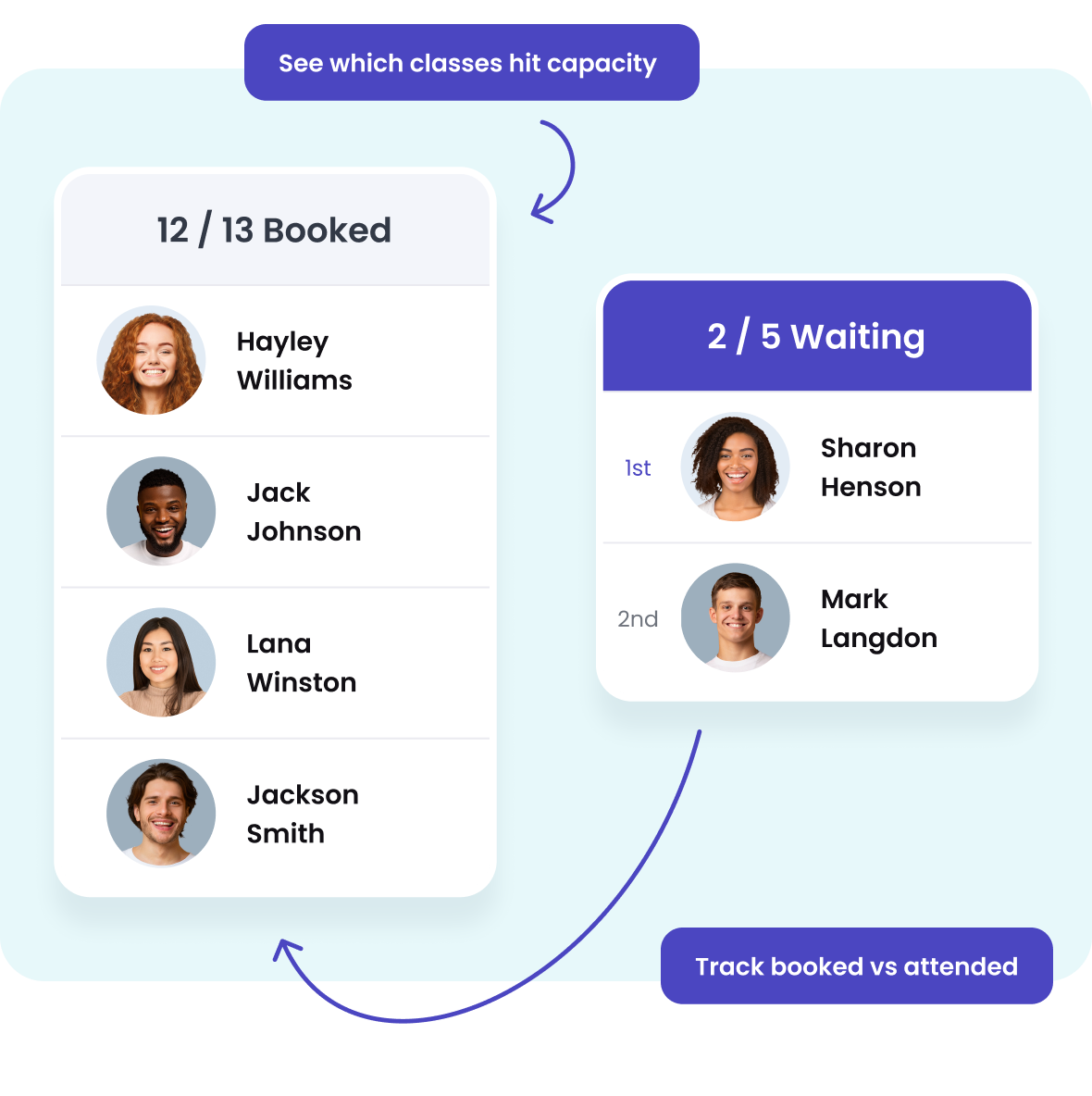
A waitlist is only valuable if it fires automatically. When a member cancels, the next person on the waitlist should receive an immediate notification with enough time to confirm their spot. If it requires a staff member to manually trigger the process, it won’t happen consistently, and the spot will stay empty.
At ABC Glofox, we handle waitlist automation end to end: cancellation triggers the waitlist notification, the next eligible member confirms via your premium branded app, and the class fills without any front desk involvement.
Reducing Trial No-Shows Before They Happen
The operational fixes to reduce gym no shows above apply to class attendance generally. Trials require additional attention because the stakes for conversion are higher and the prospect’s commitment level is lower.
Warm up the prospect before day one
Between booking and the trial date, the goal is to make the prospect feel expected, not just scheduled. In fact, a strong onboarding process can significantly increase trial attendance gym conversions. An automated welcome sequence should include a confirmation, what to bring, what to expect, and ideally a personal touch from a staff member.
Small details matter: their name on the roster, a reserved spot, a message from the instructor. Each signals that someone is waiting for them, which is a meaningful barrier to ghosting.
Make booking and cancellation easy
Friction before the trial compounds no-show risk. If booking is cumbersome, commitment drops before the prospect has even arrived. If cancellation is hard, they ghost instead of actually canceling, which eliminates your chance to rebook the spot.
At ABC Glofox, our branded app puts trial booking and check-in one tap away. Easy cancellation keeps the door open. A prospect who cancels can be re-engaged; one who ghosts is harder to recover.
📝 Read More: Why ABC Glofox is the Best Gym Booking Software in 2026
Re-engage no-show prospects within 72 hours
When a trial prospect doesn’t show, the 72-hour window following is your best chance to recover the conversion. A low-pressure follow-up with an easy rebook link, fired automatically when a no-show is triggered, keeps the opportunity alive without manual effort from your team.
Our CRM, ABC XLerate, handles this automatically, so trial no-shows never fall through the cracks.
Using Your Gym Data to Lower Your No-Show Rate Over Time
Reduce gym no shows more successfully by using data to spot patterns before they compound. Here’s how.
Track patterns, not just totals
Your overall no-show rate is a lagging indicator. The more useful numbers are underneath it:
- Which class types have the highest no-show rates?
- Which time slots?
- Which member segments (new members, drop-in pass holders) skip most?
Tracking trial attendance gym metrics as well helps you identify where prospects are dropping off.
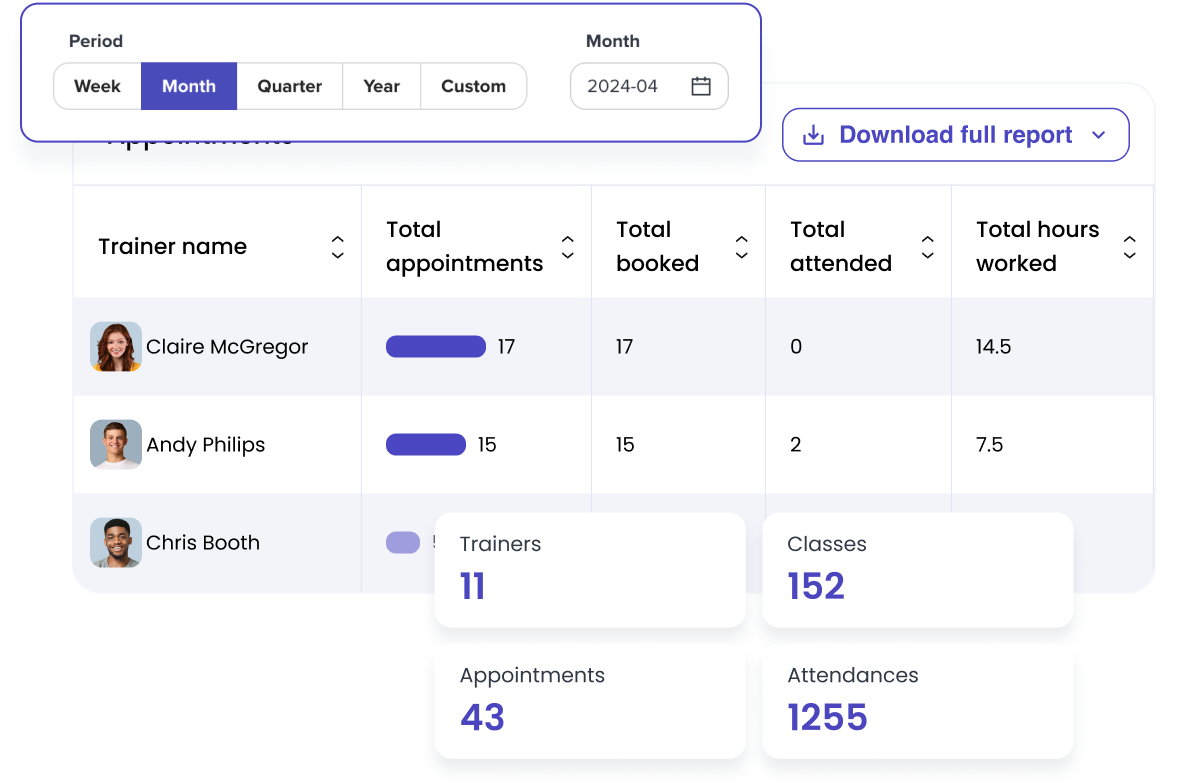
At ABC Glofox, our No-Shows Report puts this all in your dashboard so you can see it at a glance. When you can see that Monday 6am bookings no-show at twice the rate of Wednesday 6pm bookings, you have something actionable.
📝 Read More: The Benefits of Using Gym Booking Software
Use data to adjust
High no-show rates at specific time slots show that you need to either reschedule the class or prioritize gym appointment reminders for those bookings.
Drop-in pass holders and trial prospects show up less reliably than monthly members, so automated reminders should be weighted toward those segments.
Members who miss their first two sessions within 30 days should be routed into a re-engagement workflow.
📝 Read More: Save Time and Money: How ABC Glofox Replaces 5 Tools with One Platform
FAQs: gym no show rate and How to Reduce It
What is a good no-show rate for a gym?
For gym classes, below 10-15% is considered strong. Rates above 20% indicate a structural problem with reminder timing, booking commitment mechanics, or gym class no show policy enforcement. For trial sessions, below 20-25% is achievable with a solid pre-trial welcome sequence and automated reminders. The target depends on class type and whether pre-payment is required.
How do you calculate a no-show rate?
Divide the number of booked spots that went unfilled without cancellation by total bookings in a given period, then multiply by 100.
For example: 15 no-shows from 100 bookings equals a 15% gym no show rate. Track this weekly by class type and member segment; the pattern data is more useful than the monthly total alone.
What is a typical no-show fee for gym classes?
Late cancellation and no-show fees typically range from $5-$25, depending on class type and price point. The specific amount matters less than consistent enforcement.
How do gym owners reduce no-shows for free trial sessions?
The most effective combination when it comes to how to reduce gym no shows with software is:
- An automated welcome sequence after booking.
- A personal staff touchpoint before the trial date.
- A 24-hour SMS reminder.
- An automated rebook link sent within 72 hours if the prospect no-shows.
Make the prospect feel expected, not just scheduled.
Stop Losing Revenue to No-Shows With ABC Glofox
When trying to reduce gym no shows, the three levers to use are automation (reminders and waitlist notifications), commitment mechanics (pre-payment or credit deductions that nudge attendance), and data (patterns that tell you where to intervene before no-shows become churn).
When it comes to how to reduce gym no-shows with software, at ABC Glofox, we can help connect the dots.
With our tools, you can build automated reminder sequences, booking and credit logic, and detailed No-Shows Reports. Our CRM workflows can help studio owners re-engage trial no-shows within 72 hours, without extra work on your end.
Ready to see it in action? Book a free demo to see how we can help you reduce gym no show rates across your classes and trials.

Table of contents
- What Is a Gym No Show Rate (and Why It Matters)
- Why People No-Show (The Attendance Psychology You Need to Know)
- How to Reduce Gym No Shows: Operational Fixes That Work
- Reducing Trial No-Shows Before They Happen
- Using Your Gym Data to Lower Your No-Show Rate Over Time
- FAQs: Gym No Show Rate and How to Reduce It