
TL;DR: Gym SEO helps your business show up when nearby people search Google. Ranking locally creates predictable inbound leads.
–
When someone in your area searches “gym near me” or “yoga studio in [city],” Google decides in a split second who shows up. If your gym isn’t near the top of those results, potential members won’t find you. They’ll find someone else.
Gym SEO is how you fix that. It’s how you make sure your business appears when people in your area search for what you offer. You don’t need to be a tech expert to do it. The steps are straightforward, and the impact compounds the longer you stay consistent.
This guide walks through the most important local SEO strategies for gym owners and studio operators, from setting up your Google Business Profile to building local backlinks. Each step ties back what actually matters: a steady stream of new members walking through your door.
What’s Inside
- What Is Gym SEO (and Why Does It Matter)?
- How to Optimize Your Google Business Profile
- Build a Local Keyword Strategy for Your Gym
- Make Sure Your Gym Website Works for Search
- Get Your NAP Consistency Right
- Create Location-Specific Landing Pages
- Use Reviews to Boost Your Local Gym SEO
- Build Local Backlinks That Matter
- FAQs: SEO for Gyms

What Is Gym SEO (and Why Does It Matter)?
Search engine optimization (SEO) is the practice of improving your online presence so your business shows up higher when people search for what you do.
For most gym owners and studio operators, SEO for fitness gyms is really about local SEO. You’re not competing nationally. You’re competing in the areas where your potential members actually live and work.
One of the most valuable spots in local search is the local pack: the map results that appear at the top of Google when someone searches “gym near me” or “boutique fitness studio in [city].”
- These three listings pull in more clicks than almost anything else on the page. Getting into that map pack can directly increase foot traffic and trial sign-ups.
Unlike paid ads, which stop delivering results the moment you pause your budget, solid gym SEO keeps working over time. Every improvement builds on the last, and the leads it generates come from people already searching for what you offer.
📝 Curious how AI-powered search is changing things? Check out: What Is AEO? A Simple Guide for Gyms and Fitness Studios in 2026
How to Optimize Your Google Business Profile
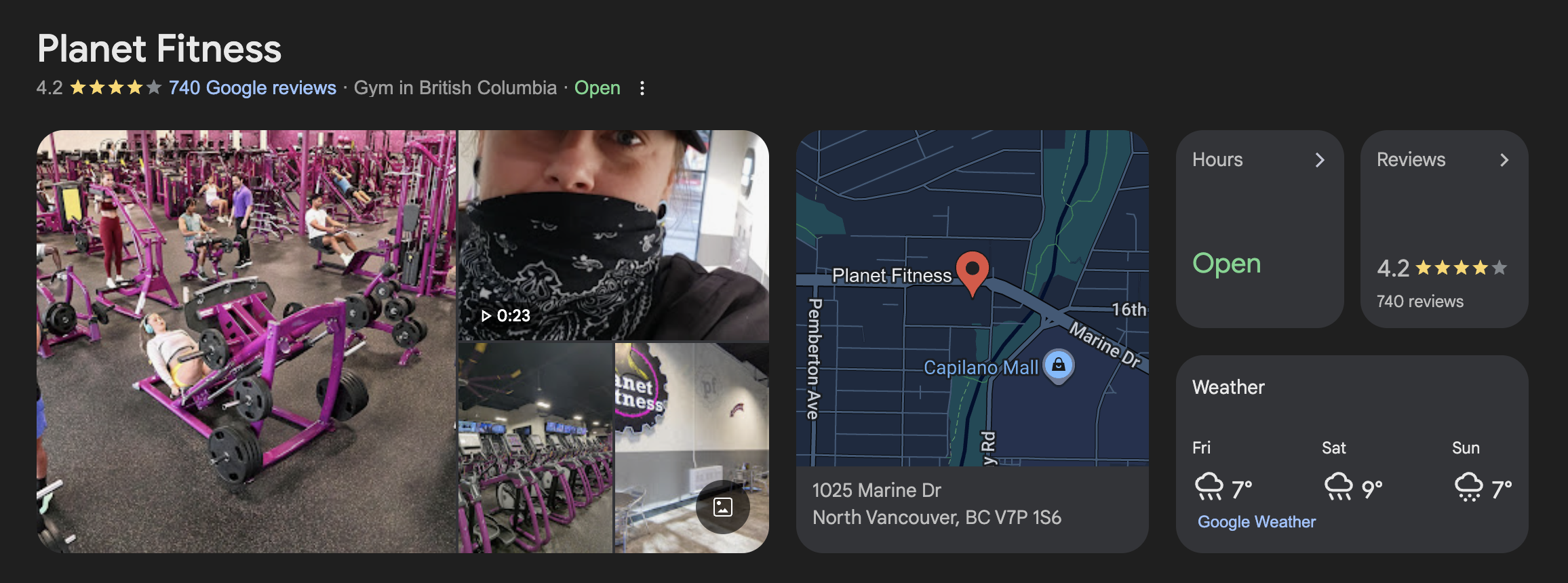
Your Google Business Profile (GBP) is the highest-impact, lowest-effort starting point for local gym SEO. It’s the listing that appears when someone searches your gym’s name or finds you on Google Maps, and most potential members see it before they ever visit your website.
Claim and verify your listing
If you haven’t claimed your GBP yet, head to Google Business Profile, search for your business, and follow the verification steps. Selecting the right business category, such as “Gym,” “Fitness Center,” or “Yoga Studio,” matters more than it seems. It tells Google what searches to match you with.
Verification typically takes a few days via postcard, phone, or video.
Complete every field in your profile
A fully completed profile ranks better than a half-finished one. Fill in your name, address, phone number, hours, services, and a description that works in your primary keywords naturally (more on keywords below).
Photos have a bigger impact than most gym owners expect. Listings with regular photo updates get more clicks. Add images of your space, classes, equipment, and staff, and keep them current as your gym evolves.
Accurate hours matter too. Regularly updating your hours will prevent disappointing, confusing, or frustrating your members.
Post updates and respond to questions
Google Posts let you share class launches, promotions, and events directly in your listing. They appear in search results and signal to Google that your business is active.
The Q&A section of your GBP also surfaces directly in search results. Don’t wait for people to submit questions. Add common ones yourself:
- What membership options do you offer?
- Is there a free trial?
- What amenities do you have?
These answers can appear before someone even clicks through to your site.
📝 Learn More: How to Use Google My Business for SEO
Build a Local Keyword Strategy for Your Gym
Before you can rank for the searches that matter, you need to know what your potential members are actually typing. That’s what local keyword research is about, and for SEO for gym owners, it’s more targeted than most people realize.
Find the keywords your potential members are searching
Local gym searches follow a reliable pattern: service + location + intent. Think “HIIT classes in Austin,” “affordable gym membership downtown Chicago,” or “Pilates studio near me.”
Start with free tools:
- Google Autocomplete: Type your service into Google and note the suggestions. These reflect real searches happening right now.
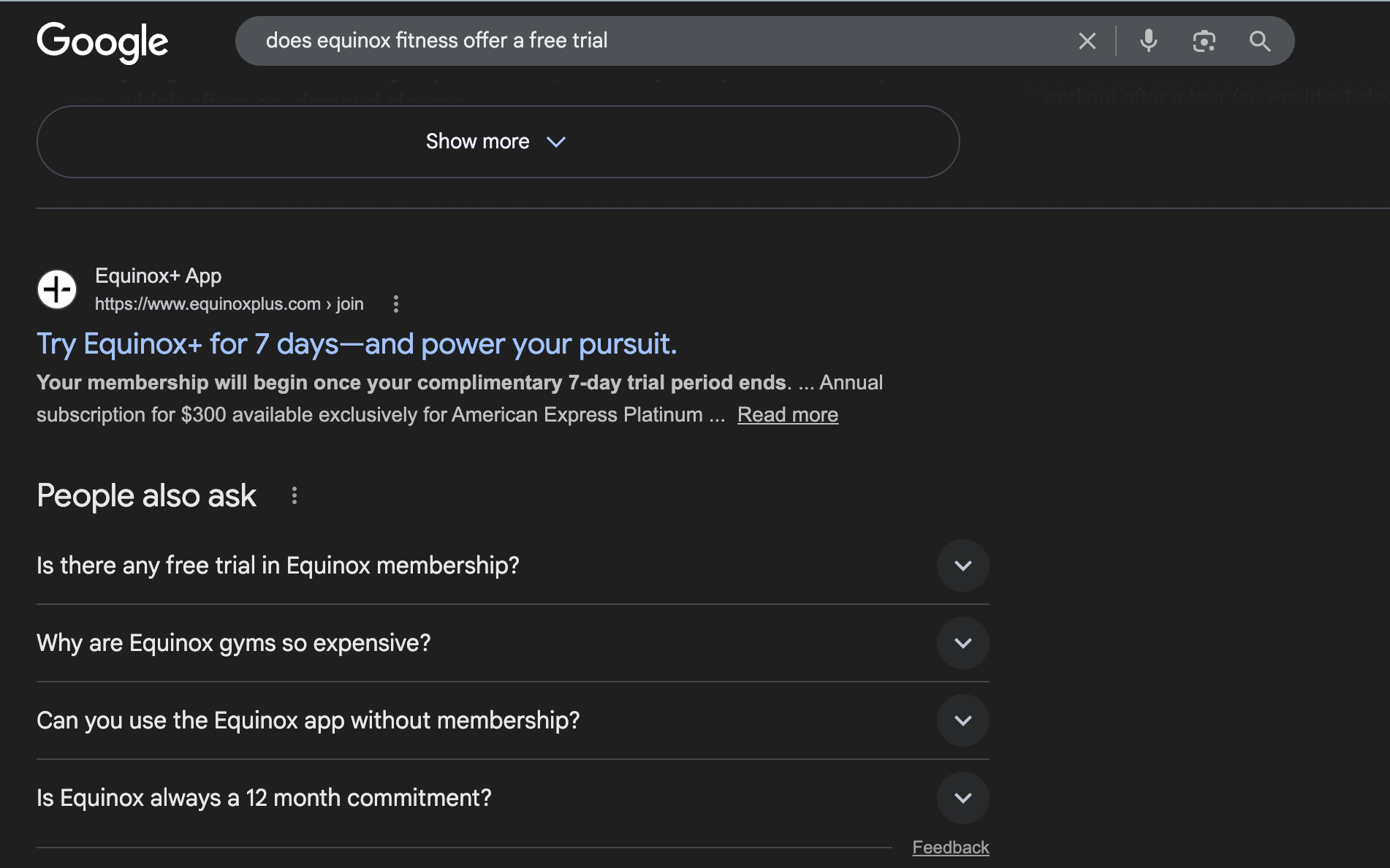
- People Also Ask: The question boxes in search results show exactly what your audience wants to know.
- GBP Insights: Your own Google Business Profile shows the actual search terms people used to find your listing.
For a deeper dive, Google Keyword Planner and Google Search Console give you search volumes and show which terms are already bringing people to your site.
📝 Explore: How to Drive More Sales With Fitness SEO Keywords
Map keywords to pages on your website
One of the most common mistakes in local SEO for gyms is targeting every keyword on a single page. Assign one primary keyword to each major page or service area instead.
Your spin class page should target “spin classes in [city].” Your personal training page should target “personal trainers in [neighborhood].”
Each page ranks for what it specifically covers, and your pages won’t end up competing against each other for the same terms.
Turn keywords into content that brings in members
You don’t need to publish content every week to see results from gym SEO. One focused blog post per month, written around a question your front desk already hears regularly, can meaningfully improve your rankings over time.
Write for your local audience. “Best beginner yoga classes in [city]” or “What to expect at your first CrossFit class in [neighborhood]” will outperform generic fitness advice every time.
This isn’t about becoming a content machine. It’s about answering the questions people are already asking.
Make Sure Your Gym Website Works for Search
Your website’s technical health is the foundation that supports everything else in your gym SEO strategy. This foundation includes mobile performance, on-page optimization, and a couple of technical additions that most competitors skip entirely.
Most of the items covered here are one-time fixes. You don’t need to understand the code, but knowing what to ask your web developer for is half the battle.
Mobile and speed basics
The majority of local searches happen on mobile phones. You risk losing interest if your website is slow or hard to navigate on a phone.
Test your own site on your phone right now. You’ll see immediately what the experience is like.
For a more detailed diagnostic, run your site through Google PageSpeed Insights. It’s free and shows you exactly what’s slowing your site down.
📝 Read More: How to Create a Gym Website
On-page SEO essentials
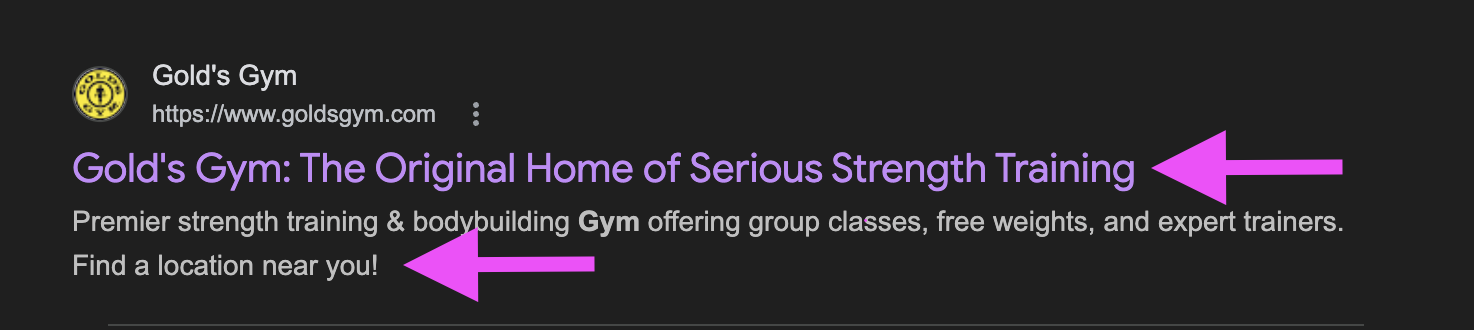
Each page on your site needs a unique title tag: a short headline that tells Google and searchers what the page covers. Include your service and location, for example “Boutique Fitness Studio in [City] | [Your Gym Name].”
Meta descriptions, the short text below your link in search results, don’t directly affect rankings but do influence whether someone clicks through. Write them like a short pitch, leading with the benefit and mentioning your location.
Use header tags (H1, H2, H3) to give your pages clear structure. Make sure your site runs on HTTPS, and submit an XML sitemap through Google Search Console so Google can crawl your pages efficiently.
Two things to ask your web developer about
These two additions are quick for a developer to implement and can give your gym a real edge in local search:
- LocalBusiness schema markup is a small piece of code that presents your name, address, phone number, hours, and ratings in a format Google can read directly. When Google understands this data clearly, it can surface it right in the search results, building trust before anyone visits your site.
- FAQPage schema is what turns your FAQ section into featured snippets: the answer boxes that appear at the very top of Google. If a potential member searches “how much does a gym membership cost in [city]” and your FAQ answers that question, schema markup gives you a real shot at that top spot.
Get Your NAP Consistency Right
NAP stands for name, address, and phone number. Google cross-references your NAP across dozens of online directories to assess how reliable your listing is. Even small differences, like “St.” in one place and “Street” in another, can cause a snag.
Audit and clean up your local citations
A citation is any online mention of your business details. Start by searching your gym name and reviewing how your information appears across the key directories:
- Google Business Profile
- Google Maps
- Yelp
- Apple Maps
- Bing Places
- Your local chamber of commerce website
Look for discrepancies in your business name, address format, or phone number. Where you find differences, update them to match your GBP exactly.
NAP consistency is one of the most overlooked factors in local SEO for fitness gyms. It signals to Google that your business is legitimate and well-managed, and that trust directly supports your local search rankings.
📝 From Google: Tips to Improve Your Local Ranking on Google
Create Location-Specific Landing Pages
Most gym SEO guides assume a single-location target. But even a single-location studio can draw members from multiple neighborhoods, and a homepage alone won’t rank for all of them.
How to structure local landing pages
If your gym serves members from several nearby areas, consider building a dedicated page for each one. A yoga studio in downtown Portland might create pages for “yoga classes in Pearl District,” “yoga classes in NW Portland,” and “yoga classes near Beaverton.”
A few principles for each page:
- Write unique content for every location. Swapping a city name in a template doesn’t work. Mention local landmarks, parking, transit access, or anything specific to that area.
- Include directions and an embedded map so the page is genuinely useful to someone planning a visit.
- Link to these pages from your main navigation or footer so Google finds and indexes them.
Location pages are especially effective for capturing “near me” searches from surrounding zip codes. They also close a gap that most competitors, who target a single city term, miss entirely.
📝 Dive Deeper: How to Optimize Your Gym for a “Near Me” Search
Use Reviews to Boost Your Local Gym SEO
Reviews are a direct ranking signal for local search. The more high-quality reviews your gym has, and the more actively you respond to them, the stronger your local gym SEO profile becomes.
Reviews are also the final trust signal before a potential member decides to book.
Build a consistent review generation system
The most effective approach is to ask at the right moment. When a member just hit a personal milestone, had their first great class, or tells you how much they love the community, that’s your moment.
Make it easy. A direct Google review link sent by text or email removes all the effort on their end.
Consistency matters more than volume. A steady stream of new reviews signals ongoing activity to Google and reassures potential members that your gym is active and worth visiting.
Respond to every review strategically
Responding to reviews, both positive and negative, is itself a local SEO signal that tells Google your business is active and engaged.
For positive reviews, thank the member by name and reference something specific they mentioned. It takes about 30 seconds and makes a real impression on anyone reading your profile.
For negative reviews, stay calm and professional. Your response matters more to future readers than the complaint itself. A measured, constructive reply shows that you take member experience seriously. Handled well, a thoughtful negative review response can build as much trust as a string of five-stars.
📝 Google Help: How to Effectively Respond to Google Reviews: Tips and Best Practices
Build Local Backlinks That Matter
A backlink is a link from another website to yours.
For gym SEO, links from other local businesses and community organizations carry extra weight. They reinforce your geographic relevance to Google and signal that your gym is a recognized part of the local area.
Practical ways to earn local backlinks
You don’t need hundreds of backlinks to move the needle. A handful of quality local links can have a meaningful impact. The most practical approaches for SEO for gym owners include:
- Partner with complementary local businesses such as a sports physio clinic, a running store, or a healthy meal prep service, for mutual website mentions or a short collaborative post. These partnerships put your gym in front of an audience that already shares your members’ interests.
- Sponsor local events, charity runs, or youth sports teams. Most event pages list sponsors with a link back to their websites.
- Contribute expert quotes to local news outlets or community blogs. A quote from a gym owner on New Year motivation or fitness trends is easy for a local journalist to include.
- Join your local chamber of commerce. Most chamber directories link to member websites.
- Host community events such as open houses, charity classes, or fitness challenges, and get them listed on local event calendars.
These efforts build SEO value over time and raise your gym’s visibility in the community beyond what search rankings alone can do.
FAQs: SEO for Gyms
What is the 80/20 rule for SEO?
The 80/20 rule in SEO means roughly 20% of your efforts drive 80% of your results.
For SEO for gym owners, that 20% is your Google Business Profile, NAP consistency across directories, and a steady flow of reviews. These areas deliver the biggest impact relative to the time they require.
What’s the difference between SEO and local SEO for gyms?
General SEO improves your visibility in search results regardless of location. Local SEO for fitness gyms targets location-based searches specifically: the map pack results, “near me” queries, and searches that include a city or neighborhood name.
For most fitness businesses competing within a defined area, local SEO is where the highest-value traffic comes from.
How does schema markup help gym websites rank in local search?
Schema markup is a small piece of code that presents your business information in a format Google can read and display directly in search results. For gyms, LocalBusiness schema surfaces your hours, address, and ratings before someone visits your site, while FAQPage schema can turn your FAQ content into featured snippets at the top of Google. Both are quick developer tasks.
Grow Your Fitness Business with ABC Glofox
Local gym SEO is one of the most cost-effective ways to grow your membership base. Every improvement you make compounds over time and keeps working for you.
Once potential members find you, ABC Glofox helps convert that visibility into long-term growth. From easy online booking to automated member engagement and a premium branded member app, we handle the operational side so you can focus on building your community.
Ready to see what ABC Glofox can do for your business? Get a free demo.