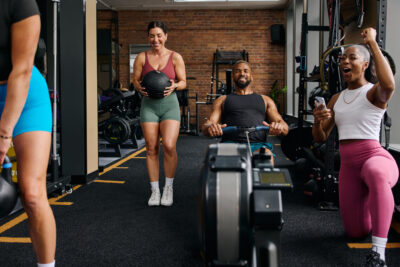
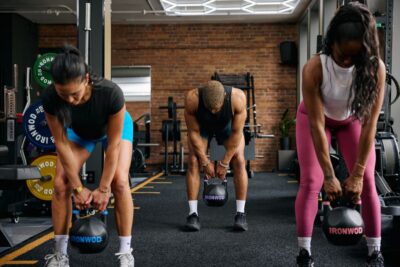
From smart equipment and wearable data to virtual coaching platforms and member management software, fitness technology now appears throughout the entire member journey. It influences how people find your gym, how they train inside and outside your facility, and how consistently they stay engaged between sessions.
In this guide, we break down the fitness technology trends that matter most for gym owners right now. You’ll learn what each trend is, the key examples worth knowing, and how to apply each one in a practical way that supports retention, revenue, and the in-person experience your members came for.
TL;DR
- Fitness technology includes connected equipment, wearables, hybrid coaching platforms, AI personalization, gamified training, and VR fitness.
- For fitness businesses, these tools create new revenue streams and improve client engagement.
- The best tech stack should improve retention, increase personal training revenue, and reduce admin time.
- To adapt to the latest FitnessTech trends, gyms should start with a stack audit, choose one outcome to improve, pilot one tool with a small group, and then measure results.
Skip Ahead
- What Is Fitness Technology or FitnessTech?
- Why Fitness Technology Matters For Gym Owners
- 6 Fitness Tech Trends Every Gym Should Know
- Trend #1 Connected Equipment and Smart Machines
- Trend #2 Wearable Fitness Trackers
- Trend #3 All-in-One Virtual Training platforms
- Trend #4 AI-powered Workout Personalization
- Trend #5 Gamified Health, Wellness, and Training Apps
- Trend #6 Virtual Reality (VR) Fitness
- Action Plan: Bringing Fitness Tech Into Your Gym
- FAQs
- Conclusion
What Is Fitness Technology or FitnessTech?
Fitness technology refers to the digital tools and systems fitness businesses use to deliver training, track progress, manage members, and extend services beyond the gym floor.
In practice, fitness technology typically includes:
- Software, such as coaching apps, virtual training platforms, and member management systems
- Hardware, including wearables and connected gym equipment
- Data, like performance metrics, attendance patterns, and engagement insights
Why Fitness Technology Matters For Gym Owners
Reason #1: Retention
With acquisition costs now up to 5x higher than retention costs, the real win is keeping members active long enough for your marketing to pay off.
The right tech, starting with a custom app, helps gyms stay present between visits through progress tracking, accountability, and timely nudges. Industry data shows that mobile-engaged members are 22% more likely to stay.
Used well, technology helps you transform your facility from a passive space into an active partner.
Reason #2: Personal training revenue
Technology cannot replace good coaches, but it can augment their skills. With the ability to analyze, remember, and organize more data at scale, trainers can now interpret patterns faster and design smarter programs. That leads to better results, faster progress, and happier members.
Personal training revenue is one of the most resilient and higher-value services in the industry. As the industry shifts from volume to maximizing LTV, tech helps increase the ceiling through better program delivery.
Reason #3: Admin time
Every hour not wasted on tasks that can be delegated or automated protects margins, which is where the battle is today. Most gyms still burn hours on scheduling, billing follow-ups, onboarding tasks, and repetitive member questions.
Automation reduces manual workload without reducing service quality. AI-powered assistants can reduce customer support workload by up to 40% by handling repeat inquiries, while staff spend more time on the floor doing the human work that drives retention.
Overall: If your FitnessTech stack supports all three, you will notice the ROI.
Free Resource: The Customer Engagement Playbook for Your Fitness Business
6 Fitness Tech Trends Every Gym Should Know
Below are six trends shaping how modern gyms run. For each one, we cover what it is, real examples, and why it matters operationally.
Trend #1: Connected Equipment and Smart Machines
Connected equipment refers to gym hardware that delivers guided experiences and integrates with apps, wearables, or member profiles. This way, your member workouts do not have to be isolated to a single session or location.
Key Categories
- Connected cardio equipment with screens, user profiles, and class-based or guided content
- Smart strength machines that track load, tempo, range of motion, and volume automatically
- Free-weight ecosystems enhanced by sensors, cameras, or AI-based form feedback
- Recovery and regeneration equipment that tracks usage and supports readiness and fatigue management
Best-in-Class Examples
Why it Matters to Gyms
Connected equipment is reshaping how gyms design space and deliver value. The industry is shifting away from large, cardio-dominated floors toward strength-focused layouts and functional zones.
Many modern facilities now organize space around distinct areas for strength training, functional movement, and recovery rather than rows of treadmills.
This zoning shift is largely driven by younger members, especially Gen Z, who prioritize strength, aesthetics, performance, and open training environments over traditional cardio-only workouts. Open floor plans with connected strength zones encourage longer sessions, social training, and repeat visits.
From an experience standpoint, connected equipment links home and gym training into a single system. Members can follow programs at home, continue them on the gym floor, and see a continuous training history.
Read More: Member Expectation Has Changed. Here’s What You Need to Do
Trend #2: Wearable Fitness Trackers
Wearables are increasingly basic expectations among members and operators, not just optional features. They allow us to collect real-time data on activity, recovery, and physiology.
Key Categories
- Activity and lifestyle trackers that measure steps, workouts, and daily movement
- Performance and recovery wearables that focus on strain, sleep quality, and physiological load
- Heart-rate and biometric sensors used for zone-based training and class intensity tracking
Examples
Why It Matters to Gyms
Wearables make progress visible between sessions, not just during training. When members hit early milestones, they are about 60% more likely to renew. So the goal is simple: help people see wins early and keep them moving.
With wearable integration, you also facilitate your coaches’ work. They can adjust intensity and recovery based on what the member actually did outside the gym.
From a business perspective, this increases the value of coaching and hybrid offers. Members are more likely to stick with the plan when they feel it is personal, monitored, and updated. That trust keeps them engaged and makes them more willing to pay for higher-touch services.
Trend #3: All-in-One Virtual Training Platforms
Virtual coaching platforms are software systems that enable gyms and trainers to deliver structured training, communication, and accountability beyond the physical facility.
These platforms centralize programming, messaging, progress tracking, and client management, so coaching is not limited to in-person sessions.
Key Features
- Online personal training platforms for remote and hybrid clients
- Program delivery systems for workouts, nutrition guidance, and habit tracking
- Communication and accountability tools that support check-ins, feedback, and coaching touchpoints
- Hybrid coaching platforms that combine in-gym training with at-home execution
Examples
Why It Matters to Gyms
These are not just “virtual coaching platforms,” nor are they CRMs or just gym management systems. At least not all of them.
For most gyms, they function as an operating system for your coaching or providing training: member profiles, communication, program delivery, progress tracking, and ongoing touchpoints in one place.
They also enable a true hybrid model without splitting your brand experience.
The Customer
Engagement Playbook
for Your Fitness
Business
Discover more Members can train in-club, follow the same plan at home, message a coach, log habits, and get reminders inside one continuous journey. A branded app strengthens this even more because the relationship stays with your facility, not a third-party platform.
These platforms also enable the use of AI throughout the client journey and business operations.
Check Out: The ABC Glofox Pro App Explainer
Trend #4: AI-powered Workout Personalization
AI-powered workout personalization means workouts change based on how a member is actually doing, not what the plan assumed on day one. The system considers factors such as completed workouts, effort, recovery, and goals, then automatically adjusts training over time.
Instead of giving everyone a fixed program and hoping it works, the workouts adapt as the member trains. That makes progress more realistic, more sustainable, and easier to stick with.
Key Categories
- Adaptive programming engines that adjust volume, load, or difficulty based on performance
- AI coaching systems that recommend workouts, rest days, or progressions
- Computer vision and sensor-based systems that analyze movement quality and form
- Personalization layers that sit on top of existing programs to fine-tune execution
Examples
Why It Matters to Gyms
Many companies are doing just that, as in the examples above, entering direct competition with gyms. The move should be to include such capabilities in your gym management software and in your packages.
Instead of limiting personalization to one-on-one sessions, you can enable your members to receive tailored programs based on what they actually do and their preferences.
This improves results and reduces drop-off. When training feels responsive and relevant, members are more likely to stick with it, even during periods of inconsistent attendance.
Trend #5: Gamified Health, Wellness, and Training Apps
This category has evolved into interactive training and habit systems built around gamification, streaks, milestones, and social accountability. Instead of passive wellness tracking, these tools actively shape behavior through goals, challenges, visibility of progress, and peer comparisons.
Key Categories
- Gamified training platforms with streaks, milestones, badges, and progression systems
- Social fitness networks that combine training logs, leaderboards, and community validation
- Endurance and hybrid training apps built around structured plans and performance benchmarks
- Ecosystems that integrate wearables, GPS data, and training load into a single feedback loop
Examples
- Strava
- Garmin training ecosystem
- Nike Training Club
Why It Matters to Gyms
Gamified systems tap directly into motivation mechanics that drive consistency, especially for Gen Z and younger millennials. Streaks, challenges, and visible milestones create psychological commitment. Once members build momentum, breaking the habit feels costly, which supports retention.
These tools also strengthen the bridge between “have-to” training and lifestyle activity. Your members can log outdoor runs, group training classes, and recovery across environments.
When done well, gamification features turn solo workouts into a shared experience, building community and keeping members coming back.
Read More: How Gamification in Fitness Boosts Motivation and Engagement
Trend #6: Virtual Reality (VR) Fitness
VR fitness uses headsets to deliver fully immersive workouts. Members train inside simulated worlds where movement, pacing, and intensity are driven by interactive visuals, audio cues, and in-game mechanics rather than traditional gym equipment.
This category is defined by headset-led experiences, not screens or apps layered onto real-world training.
Key Categories
- VR cardio and rhythm-based workouts that combine movement with music and visual targets
- Combat and boxing-style VR training focused on coordination, reaction time, and conditioning
- Guided immersive classes that replace traditional group fitness formats with virtual environments
- At-home VR fitness experiences that replicate class energy without physical studio space
Examples
Why It Matters to Gyms
VR fitness’s value lies in attraction, novelty, and audience expansion. For certain member segments, especially younger or tech-curious users, VR lowers the barrier to entry by making exercise feel more like play than training.
From a business perspective, VR can function as an add-on experience rather than a core modality. Small VR zones, pop-up classes, or trial experiences can drive curiosity, social sharing, and differentiation without requiring much space.
For most gyms, the idea is to use VR as an engagement layer, not a replacement for coaching or your core offering.
Action Plan: Bringing Fitness Tech Into Your Gym
✅ Start with a clear audit of your current tech stack: List every system, equipment, or software you use today. The goal is to identify tools and equipment that are overlapping, underused, or outdated.
✅ Next, choose one or two areas to optimize. Most gyms see the fastest ROI by improving retention through smart equipment, AI-driven engagement, and a branded app.
✅ Pilot one tool with a small group before rolling it out gym-wide: Use a defined segment, such as new members, PT clients, or a single class cohort.
✅ Measure impact using simple, operator-level metrics: Track retention trends, session attendance, PT engagement, and any changes in average revenue per member.
✅ Finally, train your staff for adoption: Make sure trainers and front-desk staff understand what the tool or equipment does, how it helps them, and when to use it.
Fitness technology delivers results when it is introduced deliberately, measured consistently, and owned by the team using it every day.
Free Resource: The Customer Engagement Playbook for Your Fitness Business
FAQs – Fitness Tech
- What are the major categories of fitness technology in 2024?
Fitness technology falls into seven core categories: connected equipment, wearables, hybrid coaching platforms, AI-driven personalization, engagement-first CRM systems, gamified training experiences, and VR fitness. - What tools or examples lead each category?
Leaders include smart strength and guided cardio systems, wearable ecosystems for readiness and training load, hybrid coaching platforms with branded apps, AI-based adaptive programming, engagement-focused CRMs, challenge and streak-based systems, and headset-based VR fitness apps. - Why do these trends matter to gym owners?
Each category supports one of three operator outcomes: retention, personal training revenue, or admin efficiency. Technology matters only when it improves at least one of these. - What should fitness businesses do in response?
Audit your current stack, identify one area for improvement, pilot a single tool with a small group, and measure retention, engagement, or revenue before scaling. - Which fitness tech trends have the highest business impact right now?
Engagement-first CRM platforms, hybrid coaching systems, and wearable-integrated training have the strongest impact. They directly improve retention, PT revenue, and operational efficiency.
Conclusion
Fitness technology trends only matter when they change what happens inside your business. The tools that perform best are the ones that improve retention, expand personal training revenue, and reduce admin time without fragmenting the member experience.
That is why platform choice matters. ABC Glofox is built specifically for gyms that want a single system to manage operations, engagement, and growth. It brings member management, scheduling, payments, and communication into a single platform, while staying aligned with where fitness software is headed.
With ongoing product development, native integrations, and support for wearables and modern coaching tools, ABC Glofox gives gym owners the flexibility to adopt new tech without rebuilding their stack each year. Book a demo today!