TL;DR: Small improvements in your gym trial conversion rates can lead to big revenue gains. Learn the three levers that move the number, and get a trial-day checklist and testing framework to put them into practice.
—
Before you change anything about your gym free trial, grab your calculator:
If your studio runs 50 trials a month at a 30% conversion rate, that’s 15 new members signed up. Bump that rate up to 40% without running a single extra trial, and you’re up to 20 new members.
At a $60/month average membership, this means $3,600 more in monthly recurring revenue ($43,200/year). All without changing anything else in your business!
In this article, we’ll walk through what a realistic gym trial conversion rate looks like and the three levers that control it. We’ll also cover how to improve gym conversion rates with a practical checklist, and teach you how to test your trial offers over time. Let’s go!
What Does a Good Free Gym Trials Conversion Rate Look Like?
Published industry benchmarks for free gym trials to paid conversion are harder to find than you’d expect. Let’s start with what we do know, and how to measure what matters most: your own number.
What conversion rates are operators actually seeing?
There’s even a whole Reddit thread dedicated to answering this question, citing numbers between 20% and 50% (with variation depending on business model and trial structure).
A boutique yoga studio offering a single complimentary class to warm referrals will see a very different conversion rate than a large gym running paid social ads for a 7-day free trial.
Both approaches are valid but neither tells you much about whether your number is where it should be.
In our experience working with thousands of gym and studio operators, turning free gym trials into paid memberships is one of the most important steps in the gym sales funnel. It’s also one of the least consistently tracked.
Therefore, the number worth obsessing over isn’t an industry benchmark. It’s your own, and whether it’s improving.
View this post on Instagram
How to calculate and track your own conversion rate
The formula is simple:
Memberships signed within 7-14 days of trial ÷ trials completed = conversion rate
The attribution window matters. We recommend 7-14 days post-trial for a measurement period. This is long enough to account for a follow-up sequence, and short enough that you’re still measuring trial-driven conversion rather than general lead flow.
Most gyms aren’t tracking this step explicitly, which means even starting to measure puts you ahead of the majority of operators in your market.
The path to measure is: trials booked → trials attended → memberships signed within 7 days.
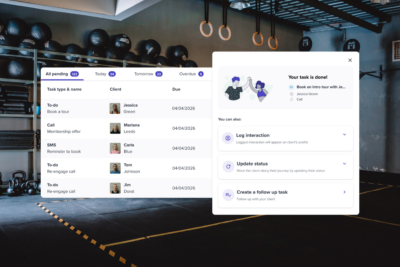
With ABC Glofox, lead conversion tracking and pipeline reporting data is visible right inside your reporting dashboard.
🎣 Read More: Gym Lead Management: How to Capture & Convert More Leads
The Three Levers That Drive Gym Trial Conversion Rates
Seeing conversion from your free gym trials comes down to three things: (1) the experience during the trial; (2) the follow-up process after it; and (3) the clarity of the offer (what exactly you’re asking prospects to commit to).
Low gym trial conversion rates almost always go back to one of these three levers. Identifying which one gives you a clear starting point.
#1. The trial experience
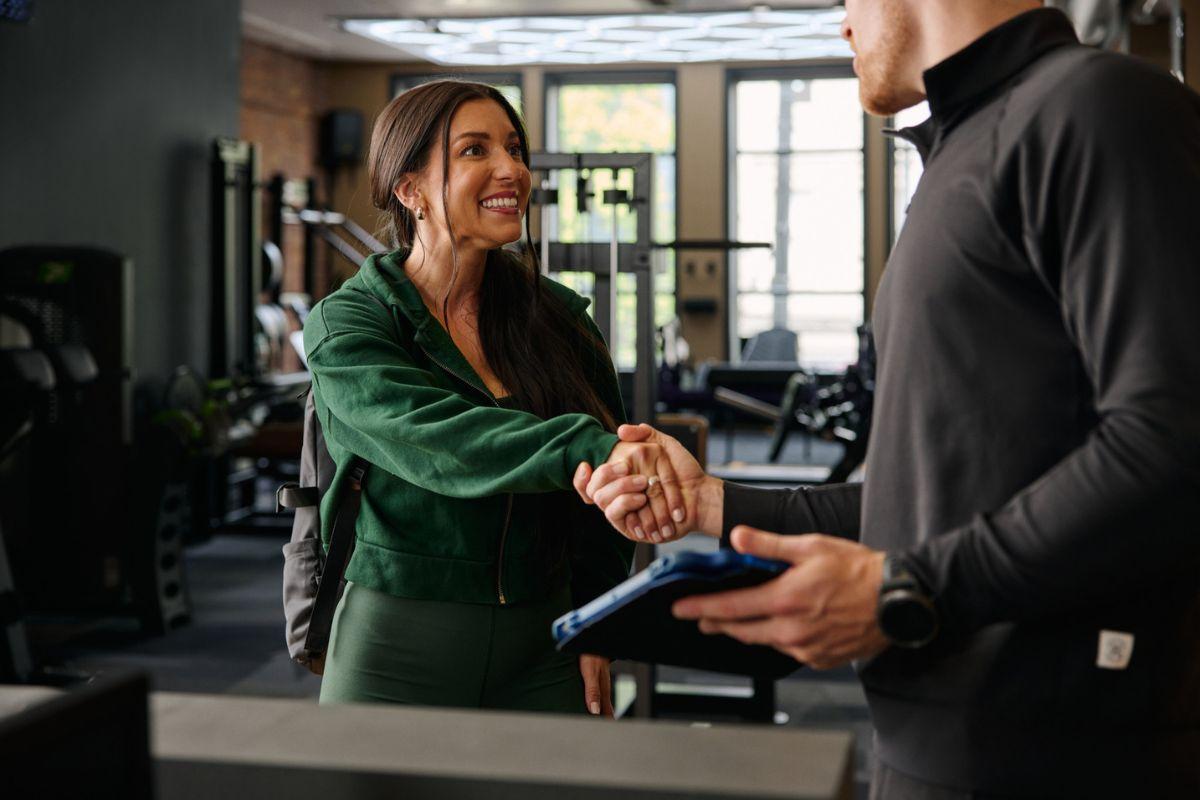
The trial is your most powerful selling tool. No amount of follow-up will compensate for free gym trials that leave prospects feeling like visitors rather than members-in-the-making.
What happens during the trial determines whether prospects can genuinely picture themselves belonging to your community. Three elements drive this:
- Personalization before they arrive: Knowing a prospect’s goals, fitness background, and what brought them to you before they walk through the door helps transform a generic tour into something that feels curated. A staff member who greets someone by name and already knows they’re training for their first 5K creates a moment of belonging right away.
- First impressions that go beyond aesthetics: Facility cleanliness and equipment matter, but studio energy matters more. Prospects will ask: “Do I belong here?” Your job is to answer that with a loud “yes!”
- Activation (making sure they do something meaningful): Free gym trials that are really just tours in disguise won’t convert. But a class with one of your most dynamic instructors and a free personal training assessment? That will convert.
📝 Read More: How to Use a Gym Trial to Sign Up New Members
“Free [classes] literally have zero value. And so they don’t compel people to stay. [They don’t] compel people to perceive what they’re getting and the value of it. They don’t increase that perceived value at all.”
– John Yax, Hot House Yoga
#2. The follow-up process
Leads go cold faster than most operators expect. Every hour that passes after a trial without contact is an hour the prospect spends talking themselves out of it or looking up other options.
When it comes to how to improve gym conversion rates, a strong follow-up sequence uses SMS, email, and a personal call. (In that order, starting within hours of the trial, not days.)
The Top 10 Barriers
Slowing Your Fitness
Business Growth
Discover more - SMS gets opened
- Email gives you space to reinforce your value proposition
- A personal call from a staff member the prospect met during the trial closes the loop with a human touch
The challenge: this sequence is too time-consuming to execute manually across dozens or hundreds of prospects. Our ABC Glofox CRM and automated workflows can handle the timing and channel logic, so your team has time to focus on conversations rather than tracking who got contacted, when.
#3. Offer clarity
If a prospect finishes their trial excited about your facility but unclear on what they’d actually be paying or what’s included, they’ll hesitate. Pricing clarity, easy to understand membership tiers, and a quick sign-up process are the building blocks of conversion.
Consider what’s best for your unique business model:
- Free trials lower the barrier to entry and work well for studios with high-energy experiences that sell themselves on impact.
- Low-cost paid trials ($10-$30 for a week) tend to have a slightly higher conversion rate. Paying for something signals a certain degree of commitment.
Handling common objections
Objections after a trial aren’t rejection. They’re almost always a signal that something specific went unaddressed, and gives your team something to respond to.
Wondering how to improve gym conversion rates with one powerful tactic? Train your staff to handle objections with ease. Here are some of the most common ones operators hear:
“I need to think about it.” Ask: “Of course, what’s the main thing you want to think through?” The answer tells you exactly what to address in follow-up.
“I want to check with my partner.” Offer to send information they can share, or suggest bringing their partner in for a trial of their own.
“It’s too expensive.” Before reaching for a discount, walk them through what it costs not to join. Then, show them the benefits of each membership tier.
“I want to try a few other gyms first.” Reinforce what makes your facility different. Don’t dismiss competitors, but re-anchore the conversation to the experience they had with you.
📝 Read More: The Gym Sales Funnel: From Lead to Loyal Member
A Trial-Day Checklist for Higher Conversions
When it comes to how to improve gym conversion rates, here’s a reliable checklist to make it happen on the ground.
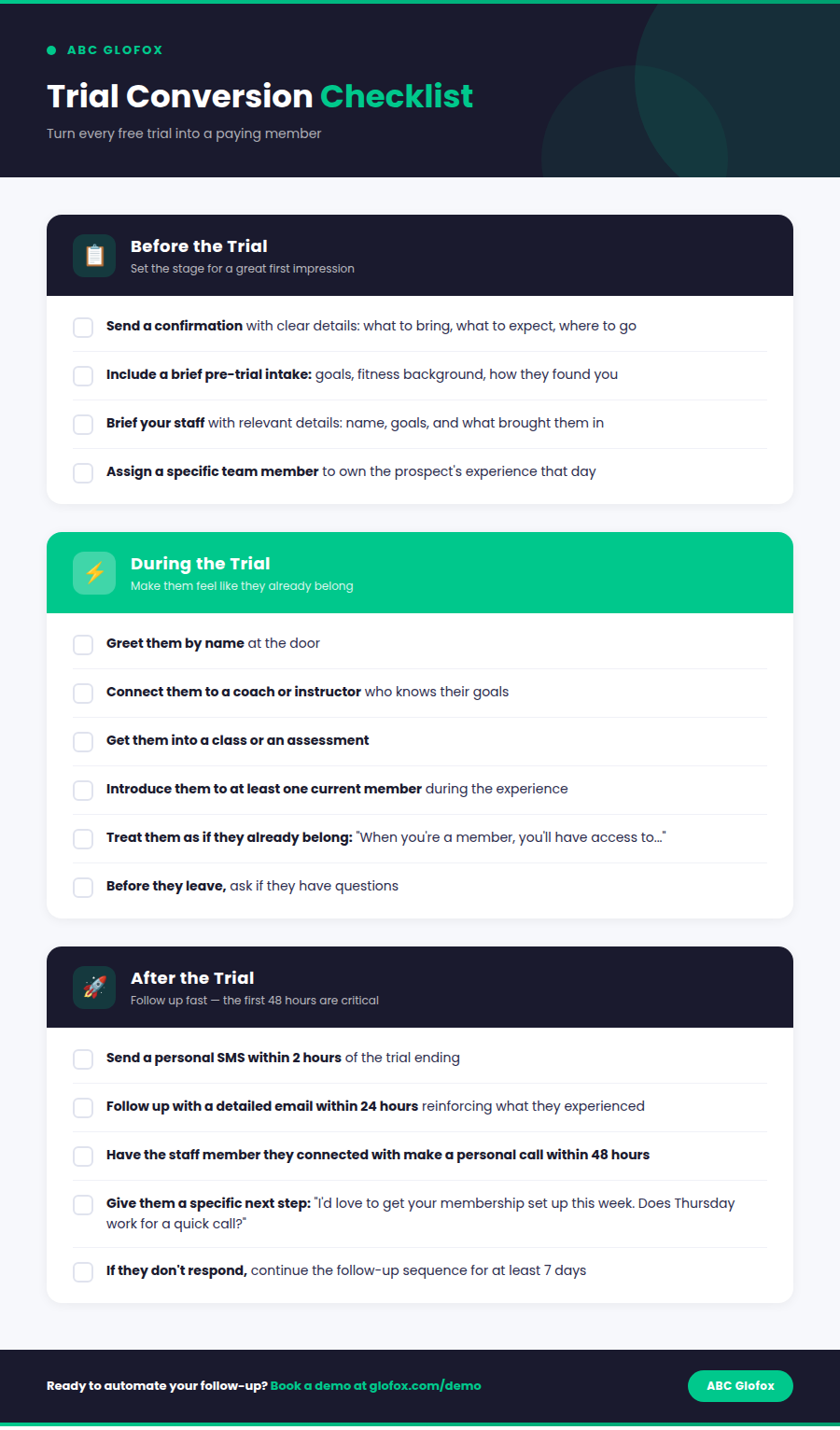
As Dr. Paul Bedford highlights, there’s a gap between the sales experience and the onboarding experience. Close that gap by treating the transition from trial to membership as one continuous journey.
📆 Read More: Why the First 30 Days Decide Whether a Gym Member Stays or Leaves
How to Test and Optimize Your Trial Offers
Most operators run the same free gym trials for years without ever testing other options. But systematic testing is one of the highest-return investments of time available.
Variables worth testing
Trial duration: A single class, 3-day pass, 7-day trial, and 14-day trial all attract different prospects and leave to different gym trial conversion rates. Shorter trials create urgency, whereas longer ones give prospects more time to build a habit (and unfortunately, more time to talk themselves out of committing.)
Free versus paid: A small entry fee ($10-$30) filters for commitment and often links to higher conversion. If you’ve only ever run free trials, a paid trial test is worth running.
Bundled versus standalone: Pairing the trial with a complimentary personal training session or nutrition consultation increases perceived value. Bundled trials frequently outperform standalone ones on conversion, even when the standalone trial is free.
Running a simple A/B test
Split your next 60 trial bookings into two groups: 30 on your current offer and 30 on the variant you want to test. Keep everything else the same: your follow-up sequence, staff, and onboarding details. Finally, measure memberships signed within 14 days and run the test for at least 60 days before drawing conclusions.
ABC Glofox’s reporting lets you tag trials by offer type and track conversion by trial category without switching between clunky spreadsheets. Each test leaves you with a better-converting structure, and each percentage point translates directly into revenue.
💸 Read More: How to Make Your Gym Business More Profitable in 2026
FAQs: Free Gym Trials Conversion Strategies
What is a good conversion rate for a gym?
Rather than benchmarking against a static number, focus on knowing your own rate and improving it month-over-month. Small improvements can compound into big revenue gains significant revenue.
What are gym trial conversion rates?
Gym trial conversion rates measure the percentage of prospects who complete a gym free trial and then sign up as paying members within a defined window (typically 7-14 days). The formula: memberships signed ÷ trials completed = conversion rate.
Is a 7% conversion rate good?
In most gyms, this rate would suggest significant room to grow. However, context matters: 7% for cold digital ad traffic vs. 7% on warm referrals would indicate a problem worth diagnosing.
What follow-up strategies work best after a gym free trial?
Combine speed, multi-channel outreach, and specificity (a named next step). Automated follow-up sequences through a CRM like ABC XLerate ensures that no gym free trial falls through the cracks due to gaps in your manual process.
Turn More Free Gym Trials Into Long-Term Members with ABC Glofox
Trial conversion is a system of levers, not a one-time fix. Your gym trial conversion rates will improve when your trial experience, follow-up process, and clarity of the offer all work together in harmony. But when any one breaks down, the whole system tanks.
We built ABC Glofox to make this system visible and manageable.
- CRM automation that executes your follow-up process
- Reporting that shows you exactly where prospects drop off
- Lead tracking that turns trial conversion from a gut feeling into a number you can improve every month.
Book a free demo to see ABC Glofox’s conversion tools in action.